


Armco crash barrier: the complete guide
Beams at 3.2m effective, two post profiles, corners, three end treatments and two bolts. Everything in the crash barrier range and how a run goes together.
Corrugated off-road crash barrier — everyone calls it Armco, after the company that first made it — is the standard way to keep vehicles off people, buildings and plant. It works by deforming: the beam takes the hit, spreads the load into the posts, and keeps the vehicle in the traffic space instead of in your racking. A scuffed beam is a cheap outcome.
This page covers the whole range: the beam, the two post profiles, corners, the three ways to finish a run, and the two bolts that hold it all together.
The beam
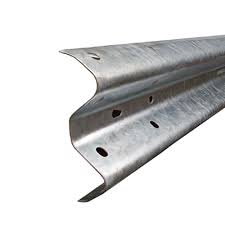
One beam, one size. It is 3504mm overall but 3200mm effective, because beams overlap at the posts — quantities always work off the 3.2m effective figure, never the overall. Galvanised steel as standard, 40kg apiece, which makes it a two-person lift and worth planning for on a long run.
Crash barrier beam
| Spec | Value |
|---|---|
| Profile | Corrugated Armco style |
| Overall length | 3504mm |
| Effective length | 3200mm when overlapped |
| Weight | 40kg |
| Finish | Galvanised as standard, powder coating to order |
Two post profiles
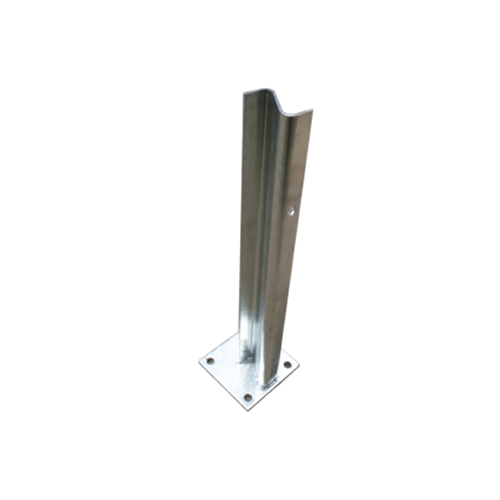
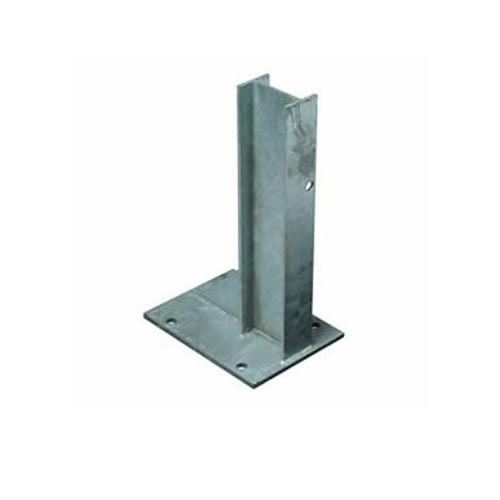
The post is where the specification decision actually sits. The Z post is the lighter of the two, a 100 x 50mm section sized for car parks, yards and internal runs where the barrier is stopping low-speed knocks. The H post is heavier — 19.3kg at 1.2m against the Z post — and it is what you want where the barrier is protecting something that matters: racking, plant, a structural column, a gas or electrical installation.
Post profiles
| Z post | H post | |
|---|---|---|
| Section | 100mm x 50mm | Heavier H section |
| Dig in lengths | 1.2m overall | 1.2m, 1.5m, 1.8m overall |
| Dig in weights | — | 19.3kg / 24.1kg / 28.9kg |
| Bolt down lengths | 560mm and 760mm overall | 560mm and 760mm overall |
| Bolt down weights | — | 18.3kg / 21.5kg |
| Typical use | Car parks, yards, internal runs | Racking, plant, columns, services |
Both come hot dip galvanised as standard, and both are available powder coated to order. Both come dig in, for concreting into the ground, or bolt down on a base plate for fixing to an existing slab.
Posts
Corners
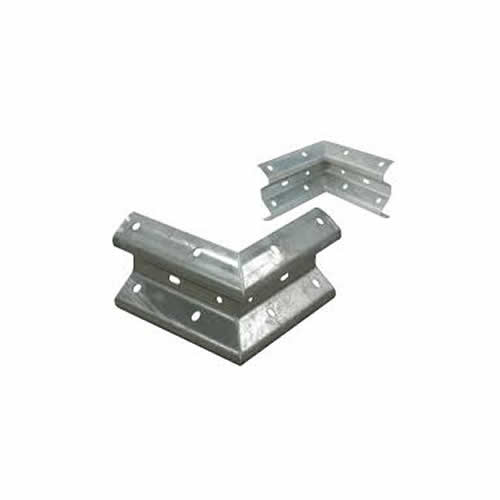
A corner section turns a run around a change of direction without cutting or forcing the beam. External corners wrap the outside of an angle — a building corner, the end of a loading bay — and internal corners follow the inside face. They are 580mm wide, 450mm long and 320mm high, hot dip galvanised, and sold individually so you buy what the layout needs.
Three ways to finish a run
A run has to stop somewhere, and a cut beam end is a sharp corrugated edge at shin and bumper height. There are three answers, and which one you need depends on who walks past it.
End treatments
| Option | What it does | Use it where |
|---|---|---|
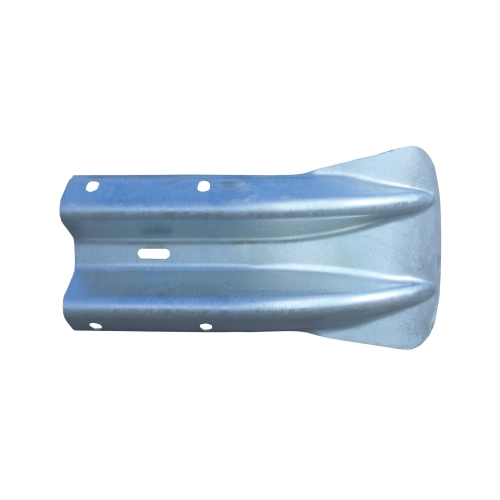
| Fish tail end | Tapers the last section and turns the edge away — the UK terminal detail | Any off-road run that needs a proper finish |
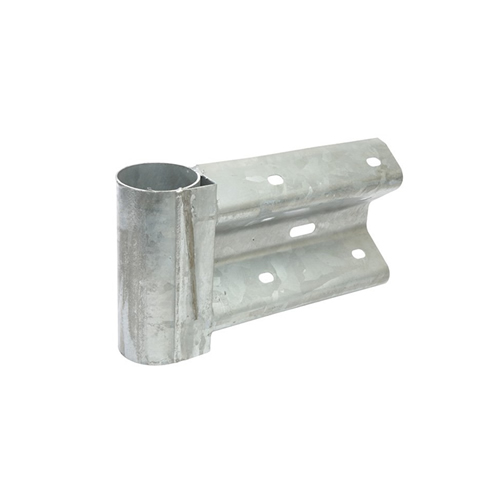
| Pedestrian end | Closes the run with the edge turned away from the footway | The run ends beside a walkway, door or crossing |
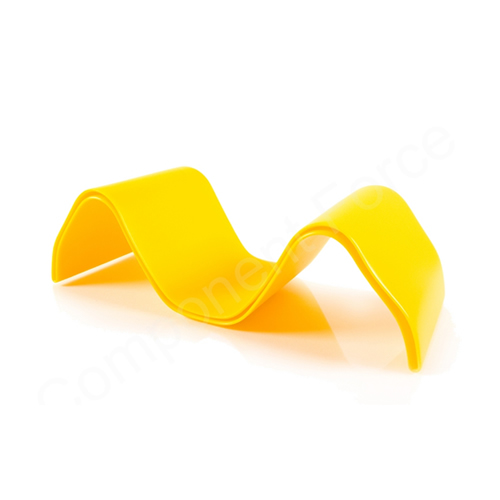
| Yellow end cap | Covers the cut end and makes it visible | Retrofit, or where a full terminal is more than the job needs |
The fish tail is the UK style — tapered and blunt, not the US flared pattern. The pedestrian end is the one to reach for wherever people are on foot around the terminal. The end cap is the cheap, retrofittable option: it fits straight over a beam end that is already installed, and the yellow reads as a warning across a dim car park.
Ends
Two bolts, and they are not interchangeable
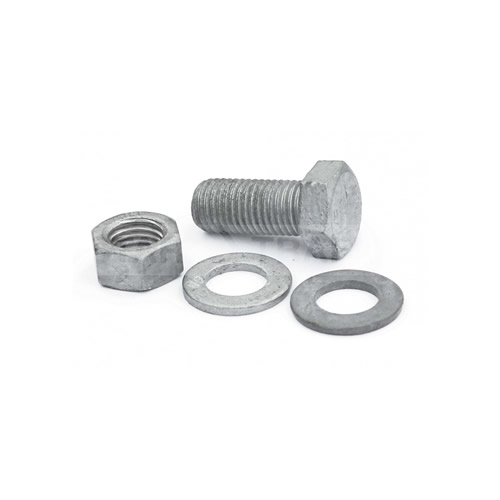
This is the single most common reorder we get. There are two M16 fixings in a crash barrier build and they do different jobs.
The fixings
| Bolt | Size | Joins |
|---|---|---|
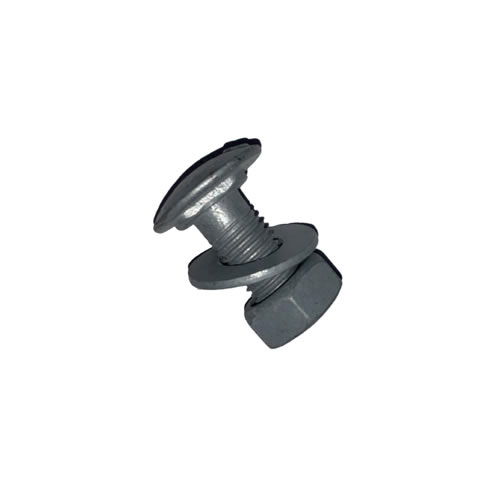
| Post bolt | M16 x 50mm | Beam to post |
| Lap bolt | M16 x 35mm | Beam to beam, corners and ends |
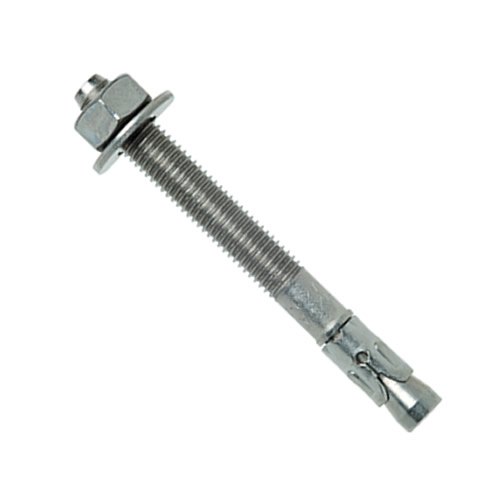
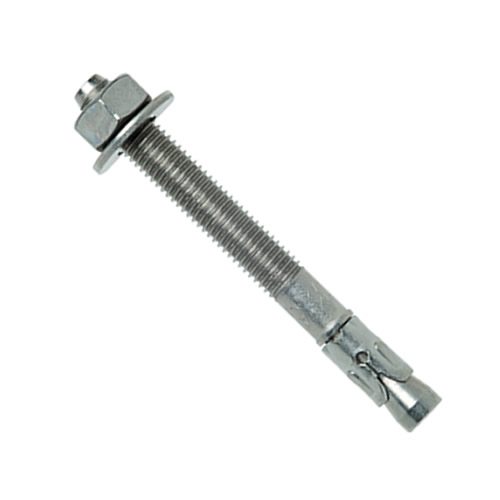
Both are galvanised, both come with the nut, and both are priced individually so you order to the layout rather than to a pack size. Bolt-down posts need their base plates anchoring to the slab as well — that is a separate fixing again.
Fixings
What else is in the range
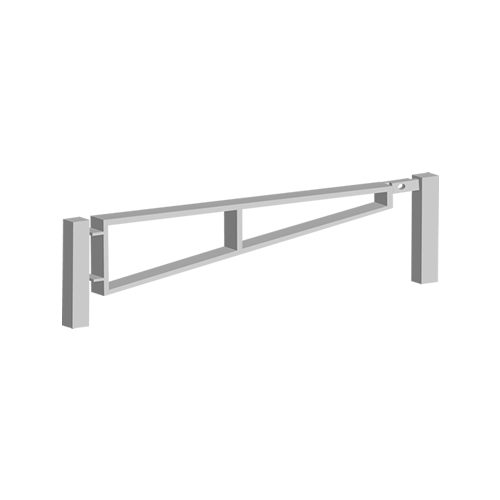
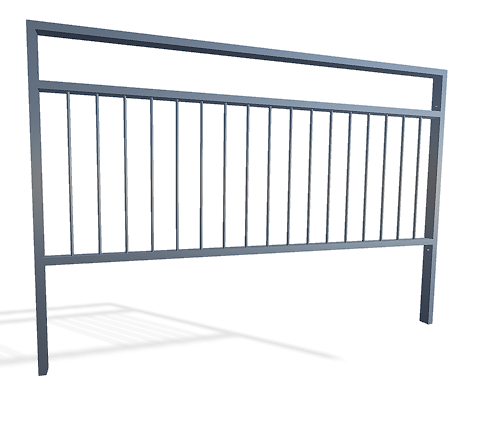
Two products sit alongside the barrier rather than in it. A swing arm barrier closes an entrance rather than protecting a line — 3m to 8m arms, 1m high, supplied with hanging, locking and open posts and a padlock. Pedestrian guard rail does the opposite job to crash barrier: it keeps people out of the traffic space rather than vehicles out of the pedestrian one.
Alongside the barrier
-1704105684997.png)
Working out a run
Count in beams, not metres. Divide the run by 3.2m and round up; you need one post per beam plus one to finish, a post bolt at every beam-to-post connection, and lap bolts at every overlap, corner and terminal joint. Add spares — a handful of M16s costs less than stopping.
Send us the layout and the vehicles using the site and we will spec it with you. What we will ask is what is behind the barrier, because that is what decides Z post or H post.
Frequently asked questions
- What is Armco crash barrier?
Corrugated steel beam bolted to posts, designed to deform on impact and keep a vehicle in the traffic space. Armco was the manufacturer's name and has become the generic term for the corrugated off-road profile.
- How long is a crash barrier beam?
3504mm overall and 3200mm effective. Beams overlap at the posts, so always work out quantities on the 3.2m effective length.
- What is the difference between a crash barrier post bolt and a lap bolt?
The post bolt is M16 x 50mm and fixes the beam to the post. The lap bolt is M16 x 35mm and joins beam to beam at the overlaps, and corners and ends to the run. They are not interchangeable.
- Should I use a Z post or an H post?
Z post for car parks, yards and internal runs taking low-speed knocks. H post where the barrier protects racking, plant, a structural column or a services installation — it is the heavier section and comes in longer dig-in lengths.
- Can crash barrier be bolted down instead of dug in?
Yes. Both post profiles come base plated in 560mm and 760mm overall lengths for fixing to an existing slab, with anchor bolts sized to suit. The slab has to be sound and thick enough for the fixing to be worth anything.