


How to set out a crash barrier run
Set out on the 3.2m effective beam length, one post per beam plus one, post bolts to the posts and lap bolts to the overlaps. Terminals decided by foot traffic.
A crash barrier run is set out by the beam, not by the tape. Everything follows from the 3.2m effective length, and the mistakes people make are almost always about using the 3504mm overall figure instead.
Setting out
- Measure the line you need to protect and divide it by 3.2m. Round up — a barrier that stops short of the thing it protects is decoration.
- Mark post positions at 3.2m centres along that line. One post per beam, plus one more to finish the run.
- Work out the working height you want the beam at, then add the buried depth to get the post length. Post lengths are quoted overall.
- Check the corners before you dig. A change of direction takes a corner section, and corners are 580mm x 450mm — they occupy layout space that a bare tape measure does not show.
Posts
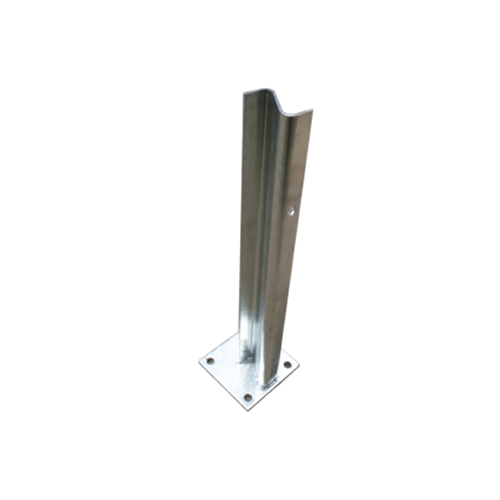
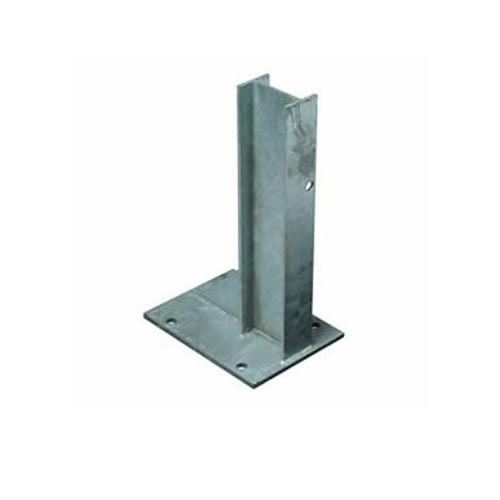
Dig-in posts get concreted and left to go off before any beam is hung on them. Bolt-down posts are anchored to the slab with the base plate fixings — check the concrete is sound, thick enough and not cracked or close to an edge at every fixing point, not just the first one.
In the ground
Hanging the beam
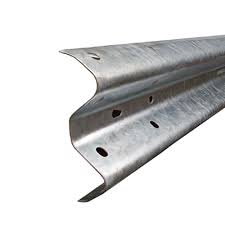
Beams overlap at the posts, which is where the 304mm difference between overall and effective length goes. Lap them in the direction of travel where there is one, so a vehicle sliding along the face meets the trailing edge of each overlap rather than the leading one.
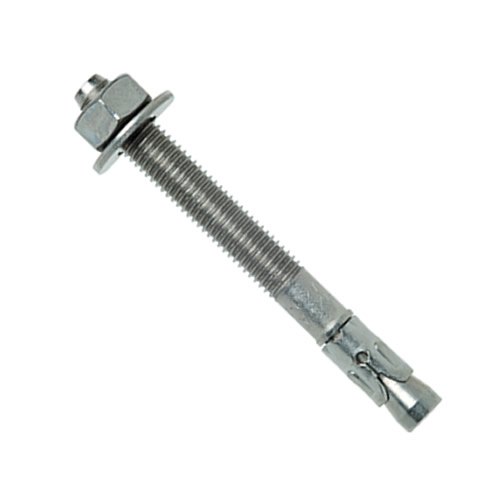
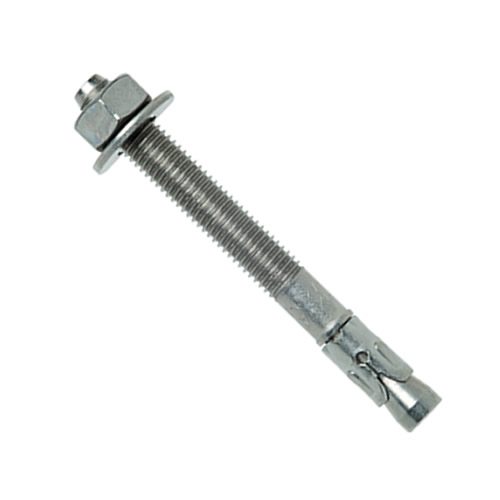
Then the two bolts, which is where orders go wrong. The M16 x 50mm post bolt passes through the beam and the post. The M16 x 35mm lap bolt joins beam to beam through the overlap, and joins corners and terminals to the run. Every run needs both and they are not interchangeable.
Fixings
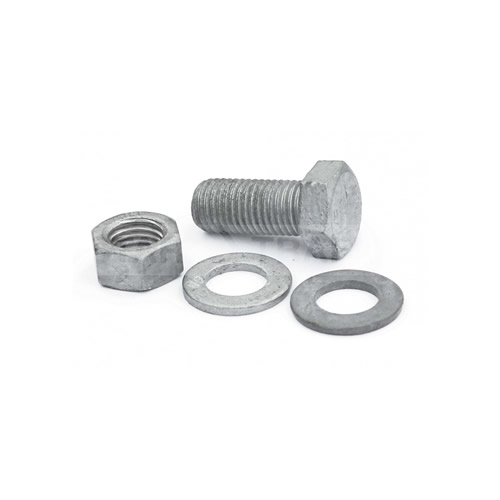
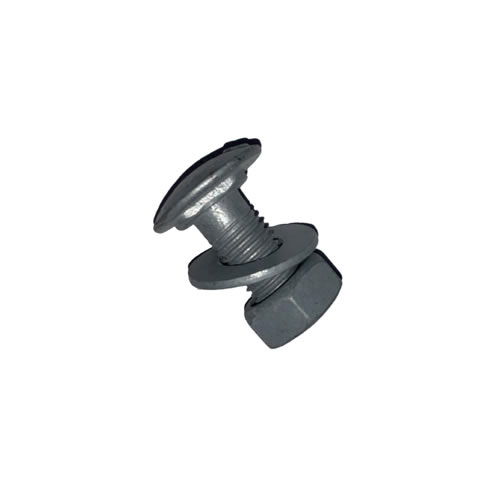
At 40kg a beam this is a two-person lift, and awkward at height. Plan the lift before the delivery, not on the day.
Finishing the ends
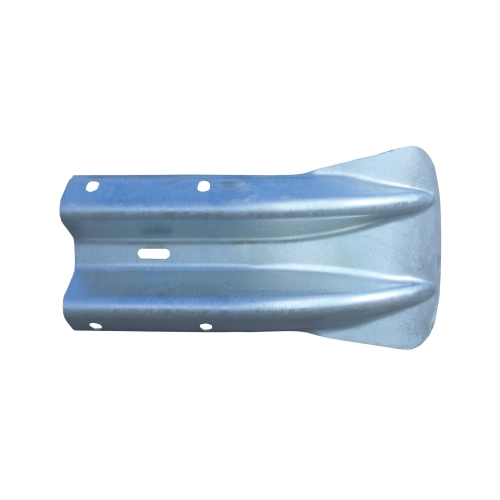
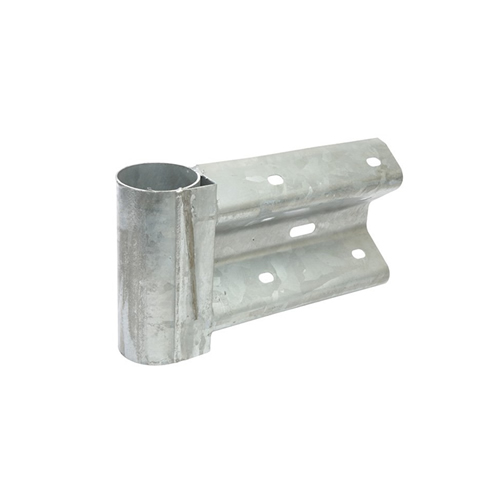
Decide the terminal by who is on foot. A run that ends beside a walkway, a door, a crossing point or a parking bay people cut through takes a pedestrian end. Anywhere else, the UK-style fish tail is the standard finish — it tapers the last section and turns the edge away.
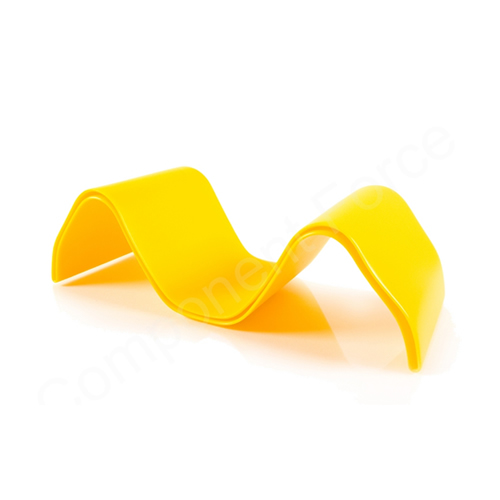
Where a run is already installed and finishing badly, the yellow end cap fits straight over the cut end. It is the retrofit answer, and in a dim car park the visibility does as much work as the smooth face.
Frequently asked questions
- What spacing do crash barrier posts go at?
3.2m centres — the effective length of the beam once it is overlapped. One post per beam plus one to finish the run.
- Which way should crash barrier beams overlap?
In the direction of travel where there is one, so a vehicle sliding along the face meets the trailing edge of each overlap rather than catching the leading one.
- How far should a crash barrier stand off the thing it protects?
Far enough that the beam can deform without the vehicle reaching what is behind it. Barrier fixed hard against a column or wall passes the impact straight through.