


Steel palisade fencing: the complete buyer's guide
Palisade is sold by the bay: one post, two rails, seventeen pales and the bolts. Understand that and heights, sections, gates and quantities all follow from it.
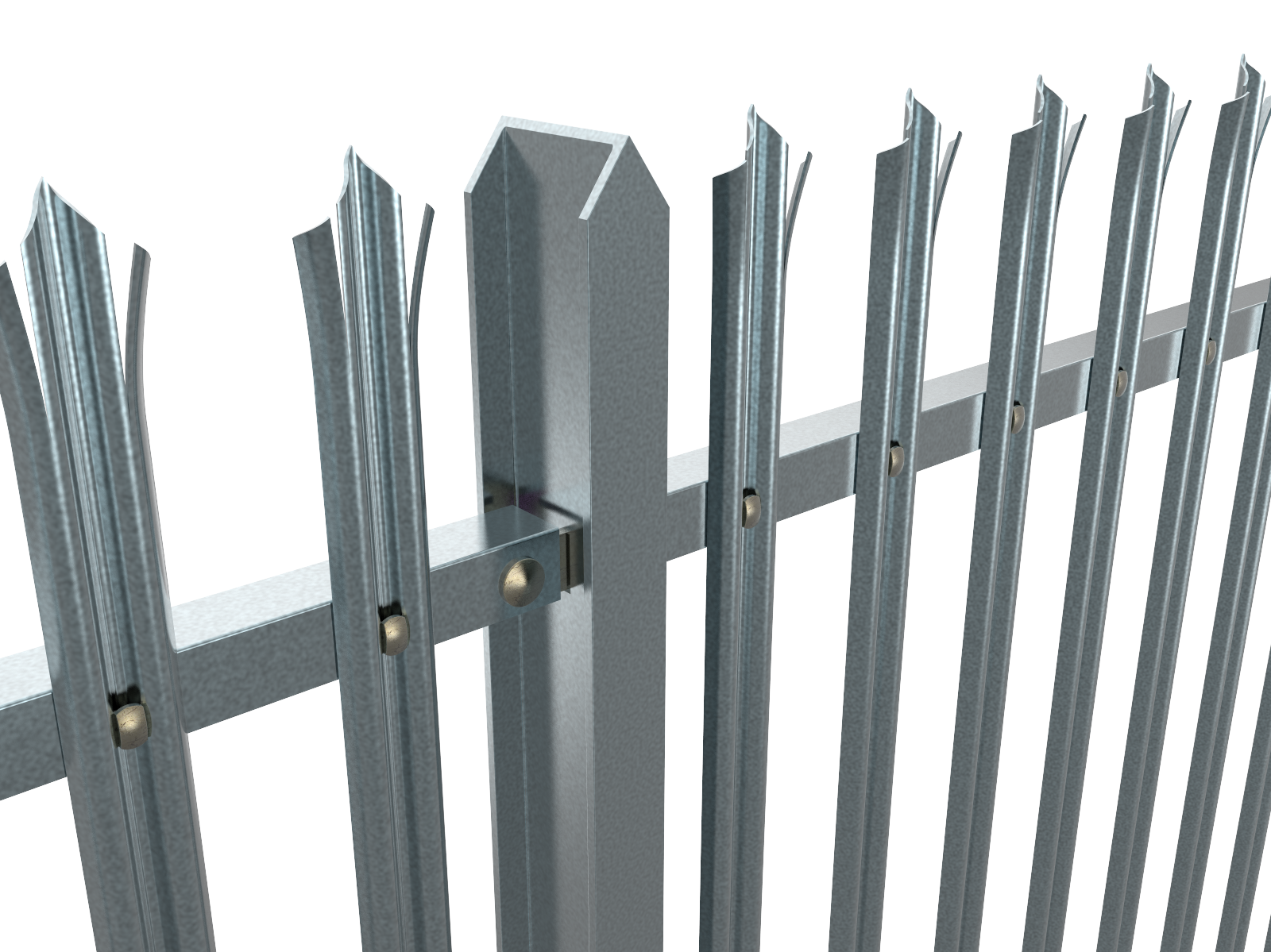
Palisade is the fence you picture when someone says security fencing: vertical steel pales, pointed at the top, bolted to horizontal rails between heavy steel posts. It has been the default for yards, compounds, substations and depots in this country for decades, and it is still what we sell most of.
The thing to understand before anything else is that palisade is bolted together on site rather than dropped in as panels. That is where all its advantages come from — it follows uneven ground, a damaged section can be replaced pale by pale, and heights and gate positions can be adjusted as the run goes in. It is also why it is sold the way it is.
Palisade is sold by the bay
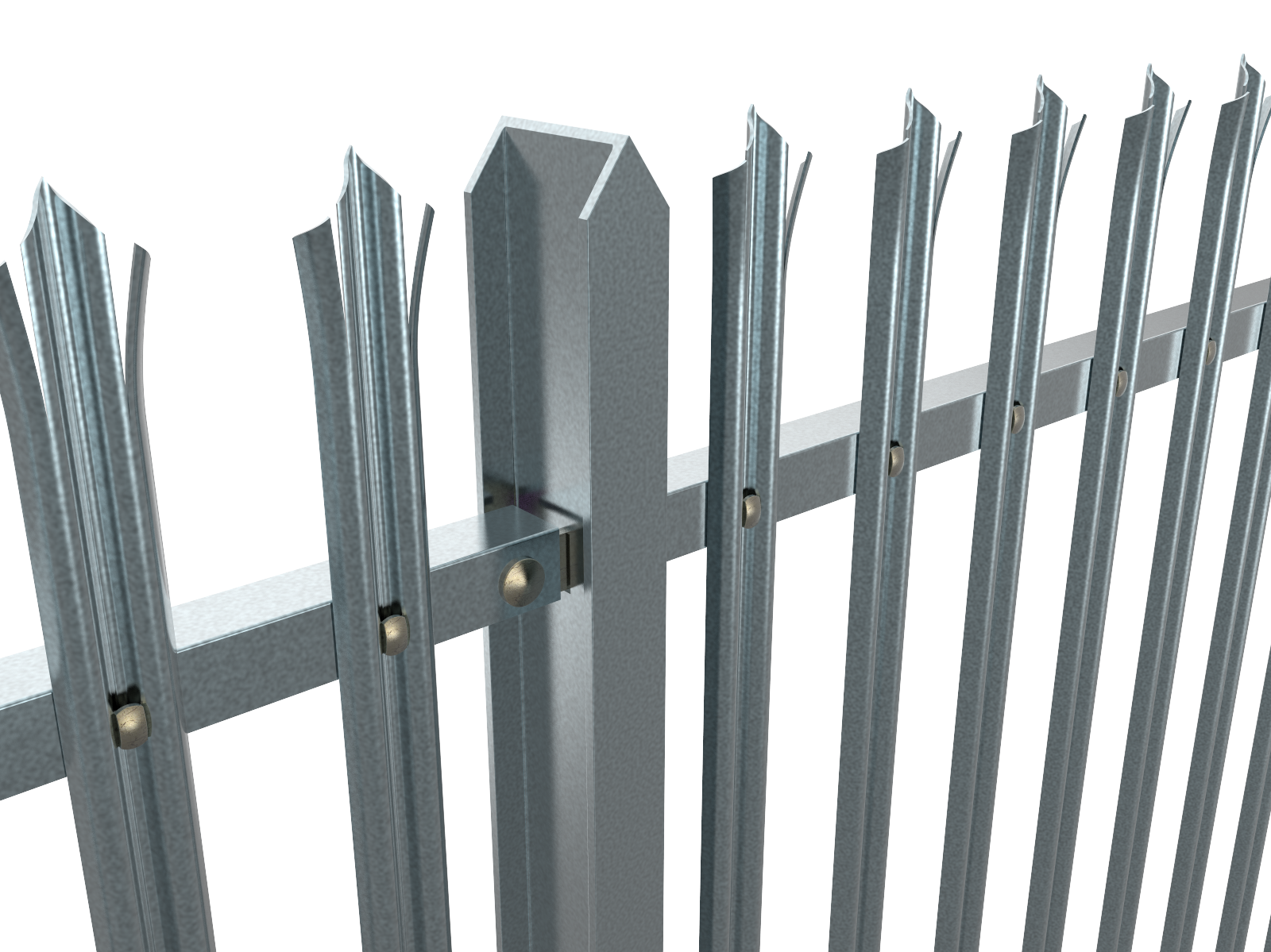
A bay is one complete span between two posts. Ours are 2.75m, and one bay contains the same parts at every height:
What one bay contains
| Part | Quantity |
|---|---|
| RSJ palisade post, 100mm x 55mm | 1 |
| Palisade back rail | 2 (top and bottom) |
| Palisade pale | 17 |
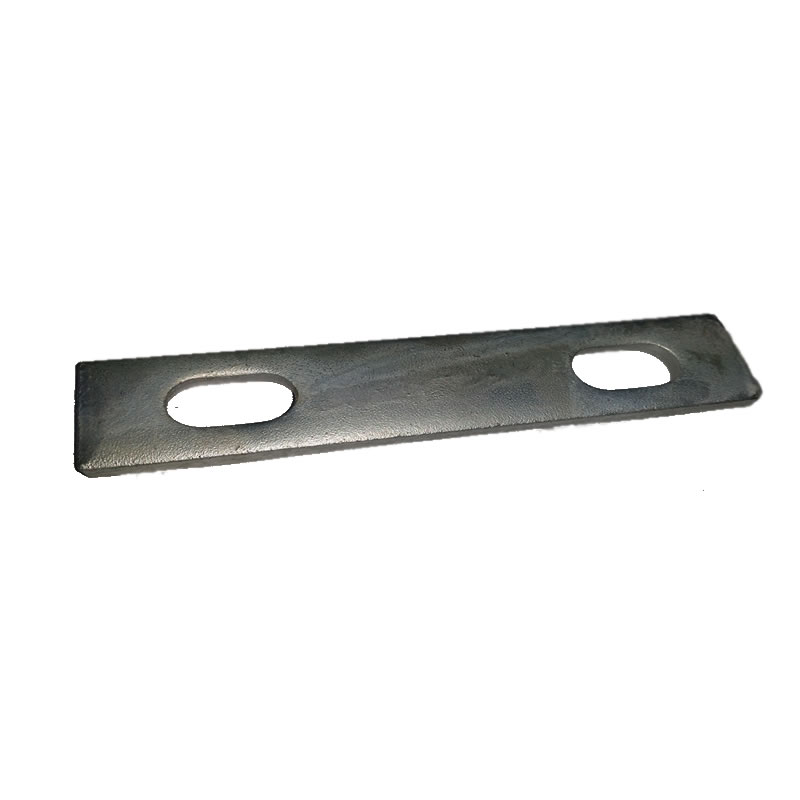
| Fish plate | 2 |
| M12 nut and bolt | 4 |
| M8 nut and bolt | 34 |
Seventeen pales, always — the pales get longer as the fence gets taller, but the count and the bay width do not change. That is what makes quantities easy: divide your run by 2.75 and round up, and you have your bay count.
Palisade by the bay
Heights
We stock seven: 1.2m, 1.5m, 1.8m, 2.0m, 2.1m, 2.4m and 3.0m. The height quoted is the height of the fence above ground, not the length of the steel — posts are supplied longer to allow for digging in, and pales are made 50mm short of nominal so there is clearance at the bottom.
1.8m and 2.4m are the two that move. 1.8m is the general commercial height; 2.4m is what goes on compounds, schools and anywhere the fence is expected to be tested. Below 1.5m you are marking a boundary rather than securing one, and at 3.0m you are into serious perimeter work where the post foundations start to matter as much as the fence.
W section or D section
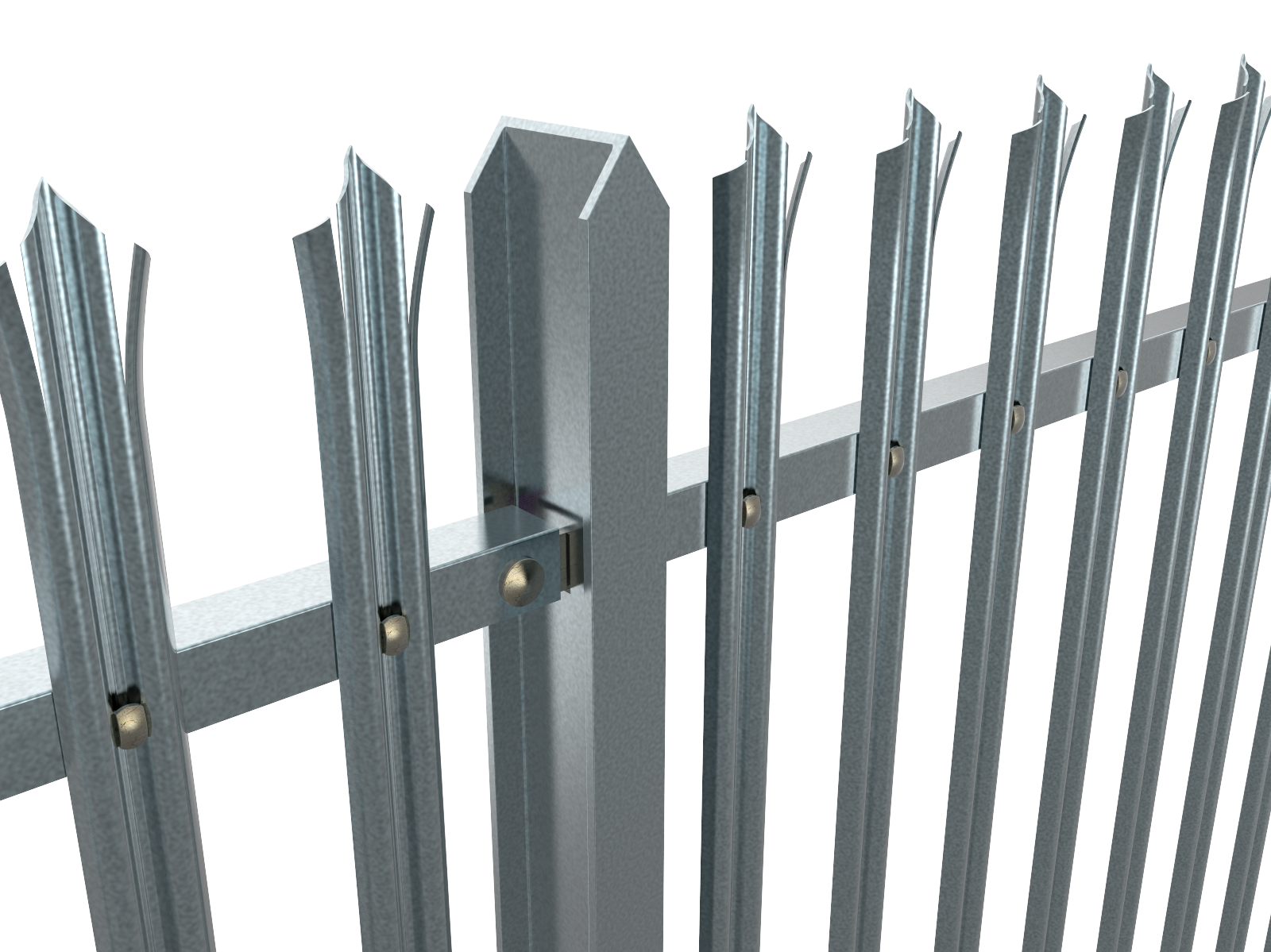
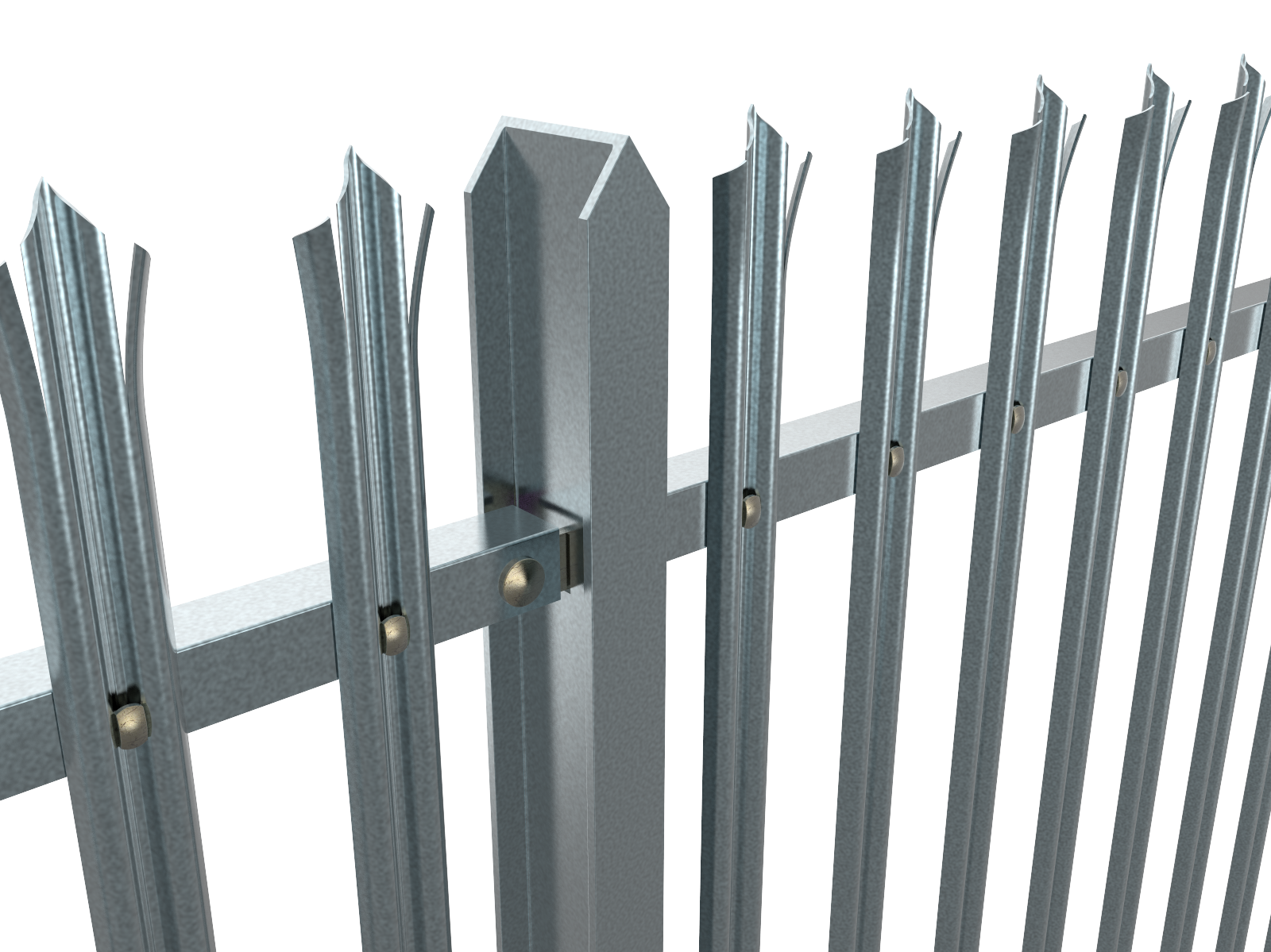
Two pale profiles, and they are not interchangeable. W section is pressed into a W shape at 2mm thick — the extra folds make it stiffer, and it takes W section bolts. D section is rounded at 2.5mm and takes its own D section bolts. Order the wrong bolts with the right pales and nothing goes together.
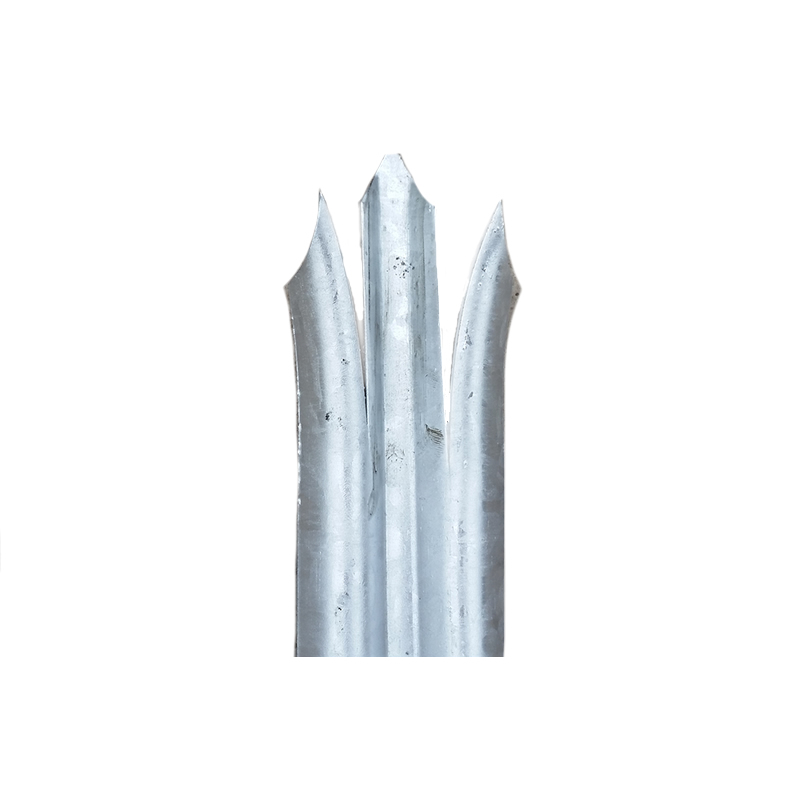
Tops come triple-pointed or round-notched. Triple-pointed is the standard security top and what most people mean by palisade. Round-notched is the softer option where the fence is public-facing and three spikes at head height would be a problem.
Galvanised or powder coated
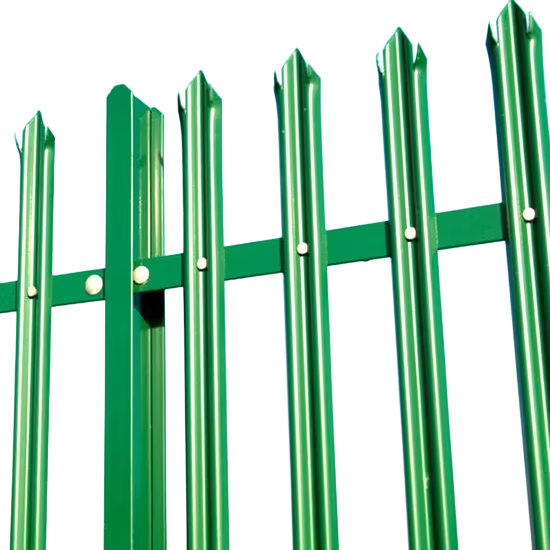
Everything comes galvanised as standard. Powder coating on top of that is available in any RAL colour and is what you specify when the fence has to look like it belongs — a school frontage, a retail site, anywhere green or black reads better than bare steel.
We also keep a stock line in green: 1.8m and 2.0m triple-pointed W section, already galvanised and powder coated, with dig-in posts. If green works for the job it saves the coating lead time entirely.
Powder coated, in stock
Kits for bigger runs
For a job of any size, the 50-bay and 100-bay kits are the simpler buy — every component matched and supplied as one order. A 50-bay kit covers about 137m of perimeter, a 100-bay kit about 275m. We do them galvanised at 1.8m and 2.0m.
Palisade kits
Posts, pales and parts on their own
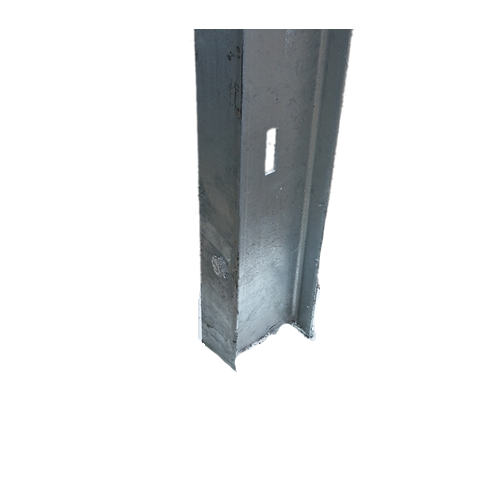
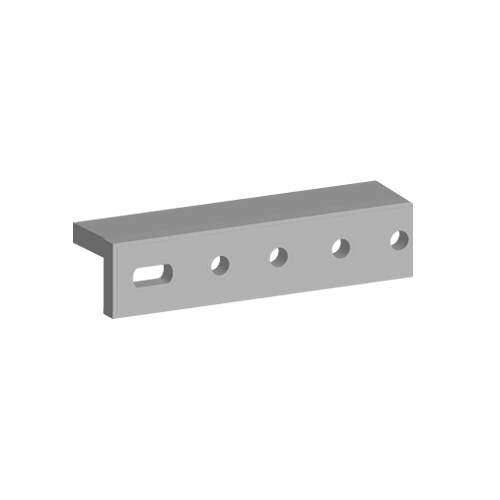
Everything in a bay is available separately, which is the other reason palisade lasts: a vehicle strike takes out three pales and a rail, not a panel and a post. Posts, pales, rails, fish plates, support feet and the whole fixing range are all stocked individually, at every height.
Components
Gates
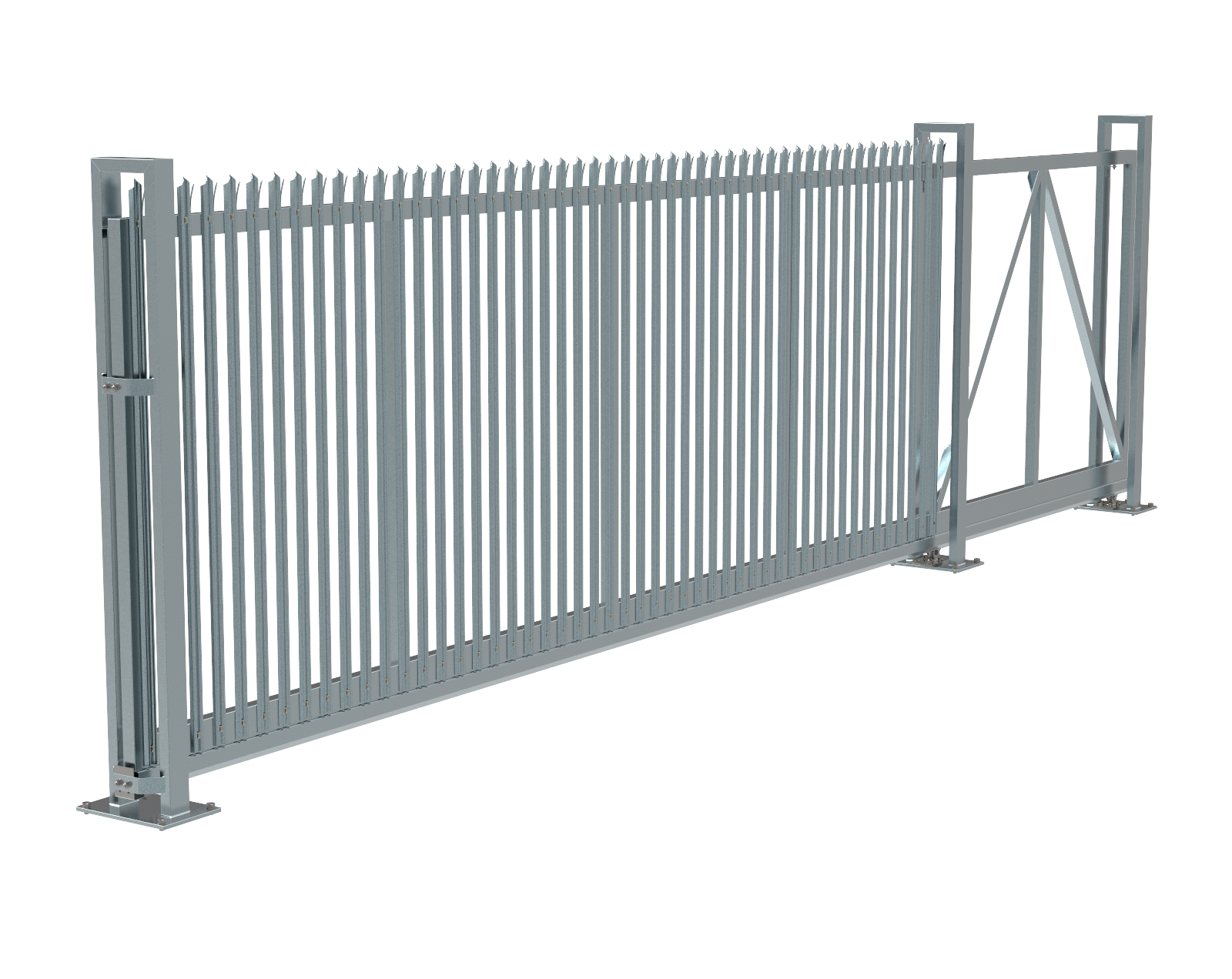
Palisade gates are made at our Merseyside yard rather than bought in, which means the standard sizes are a starting point rather than a limit. Swing gates run 1.2m to 3.0m high in widths from 1m to 10m, single or double leaf, with RHS box posts, a lockable sliding latch, a lockable drop bolt and a padlock included. Sliding gates are made to order.
Everything comes galvanised to BS EN ISO 1461 as standard, with powder coating to any RAL colour as an option.
Palisade gates

Where palisade is the wrong answer
Palisade looks like a security fence from a long way off. On a yard that is the point; on a school frontage or a housing scheme it is a problem, and mesh or railings will do the job and look considerably better doing it. If the honest requirement is that the boundary needs to look right rather than look hostile, start somewhere else.
Products covered in this guide
Frequently asked questions
- How wide is a bay of palisade fencing?
2.75m between post centres, at every height. Each bay contains one RSJ post, two rails, 17 pales, two fish plates and the bolts. Rails can be cut down to shorten a bay where a run does not divide evenly.
- How many pales are in a bay of palisade?
Seventeen, at every height we stock. The pales get longer as the fence gets taller but the count and the 2.75m bay width stay the same.
- What heights does steel palisade fencing come in?
We stock 1.2m, 1.5m, 1.8m, 2.0m, 2.1m, 2.4m and 3.0m. 1.8m is the general commercial height and 2.4m the usual specification for compounds and schools. The height quoted is above ground — posts are supplied longer for digging in.
- Is palisade fencing galvanised?
Yes, as standard. Powder coating in any RAL colour is available on top of the galvanising, and we hold a stock line in green at 1.8m and 2.0m. Our palisade gates are galvanised to BS EN ISO 1461.