


W section or D section palisade pales?
W section is 2mm and stiffer; D section is 2.5mm and rounder. The part that actually catches people is that the bolts are different and do not interchange.
Palisade pales come in two pressed profiles and people treat the choice as cosmetic. It mostly is — right up until the bolts arrive and do not fit.
The difference
| W section | D section | |
|---|---|---|
| Profile | Pressed into a W | Rounded, D-shaped |
| Thickness | 2mm | 2.5mm |
| Stiffness | Higher — the folds do the work | Slightly lower for the same steel |
| Bolts | W section bolts | D section bolts |
| Look | Angular, industrial | Softer, rounder |
W section
The W profile puts two extra folds down the length of the pale, and folded steel is stiffer than flat steel. That is why W section can be 2mm and still outperform a thicker flat pale — the shape is doing the structural work. It is the more industrial-looking of the two and the more common specification on yards and compounds.
D section
D section is rounded rather than folded, at 2.5mm to make up for the shallower profile. It reads softer from a distance, which is why it turns up on sites where palisade is needed but a wall of angular steel would look wrong.
Bay bags — one per bay
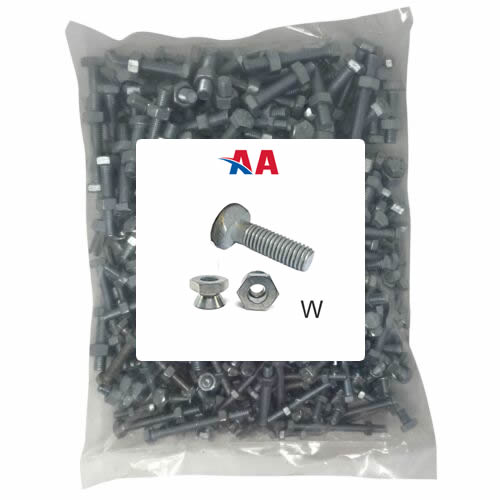
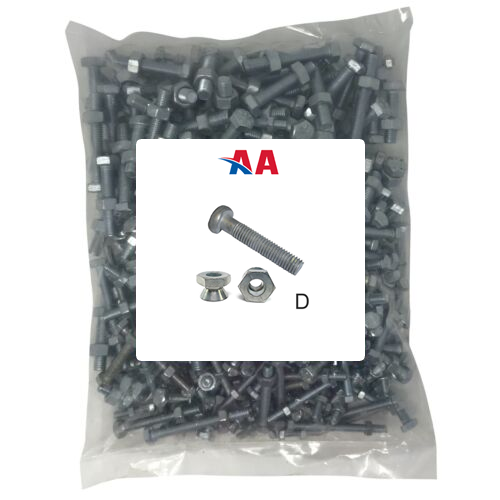
Bolts on their own
If you are buying fixings separately rather than as a bay bag, they come in boxes and in both sections. Each bay needs 34 M8 bolts and 34 M8 snap-off nuts for the pales, plus 4 M12 for the fish plates.
Palisade fixings
Pale tops
Separate from the section is the top profile. Triple-pointed is the standard security top — three sharp points that leave nowhere to get a hand or a foot over. Round-notched is the alternative where the fence is public-facing and pointed tops at head height would be a liability. Both are available on either section.
So which?
For a yard, a compound or anywhere the fence is a working security barrier, W section triple-pointed and don't think about it further. For a site where appearance carries weight, D section or a round-notched top softens it. If you are extending or repairing an existing run, match what is there — that decision has already been made for you.
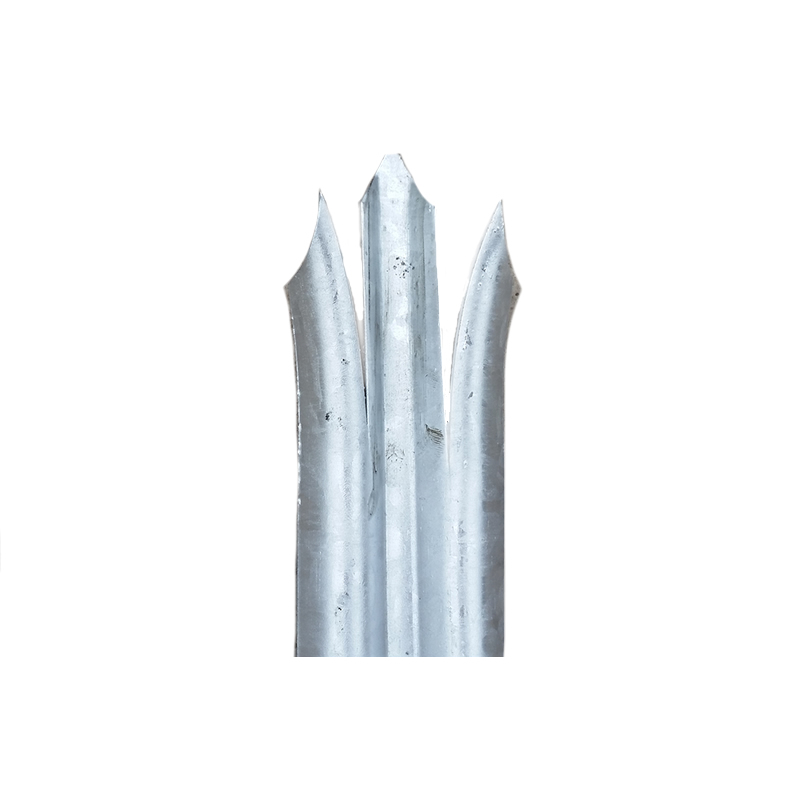
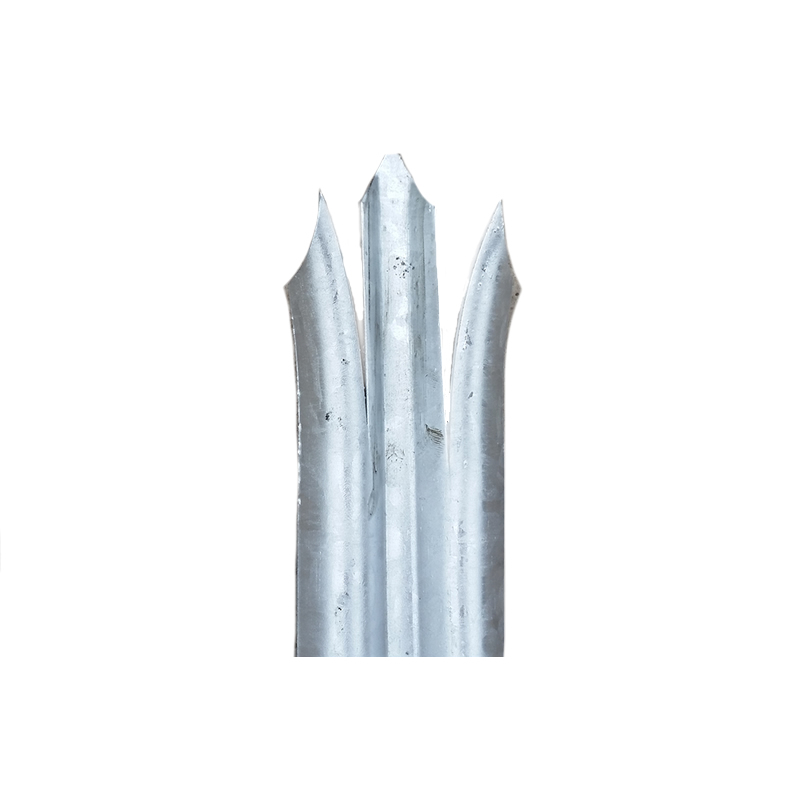
Products covered in this guide
Frequently asked questions
- What is the difference between W section and D section palisade?
The pressed profile of the pale. W section is folded into a W shape at 2mm thick, which makes it stiffer; D section is rounded at 2.5mm and looks softer. They take different bolts, which do not interchange.
- Is W section palisade stronger than D section?
W section is stiffer for its thickness because the folds carry the load, which is why it can be 2mm where D section is 2.5mm. In practice both are specified as security fencing and the choice is usually about appearance and matching what is already on site.
- Can I use W section bolts with D section pales?
No. The two profiles take their own bolts and they do not interchange. Check which section your existing fence uses before ordering fixings — getting this wrong is the most common palisade ordering mistake we see.