


Pale
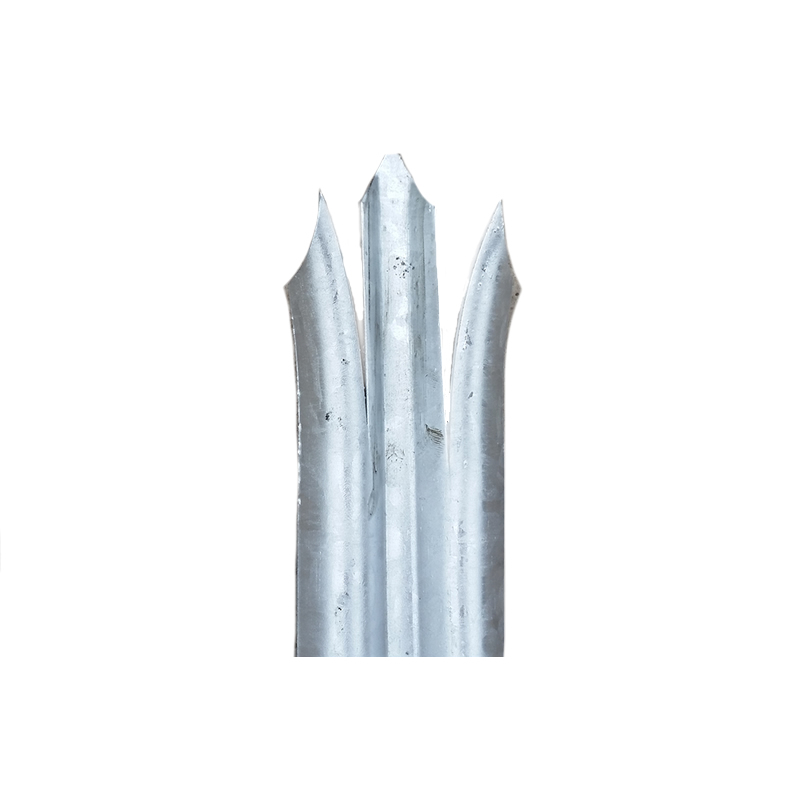
One of the vertical steel members in a palisade fence. Pales bolt to horizontal rails and are usually triple-pointed at the top to deter climbing.
Also called: pales, palisade pale
A pale is one of the vertical steel members in a palisade fence. Pales bolt to horizontal rails, which in turn bolt to the posts, and they are what a climber actually has to get past — so the profile and the top detail are where palisade earns its reputation.
W section or D section
W section pales are pressed into a shallow W, which makes them stiffer and harder to bend or lever. D section pales are rolled into a rounded D, which looks less industrial and is the usual choice where appearance carries weight. W is the security answer; D is the compromise.
Top details
- Triple pointed — three sharp points pressed into the head. The standard security finish and the reason nothing gets a hand over the top.
- Round top — blunt, for schools, housing and anywhere the public is close.
- Notched or split — variations on the pointed head.
Pales are spaced along the rail rather than butted, so a pale count follows the bay length and the spacing rather than the run length: our standard 2.75m bay takes 17 pales.
Frequently asked questions
- How many pales are in a palisade bay?
Seventeen in our standard 2.75m bay, at every height.
- What is the difference between W section and D section pales?
W section is pressed into a shallow W and is the stiffer, more secure profile. D section is rounded and looks less industrial, which suits public-facing boundaries.