


Palisade or mesh: which security fence to specify
Palisade resists attack and looks like it will; mesh gives visibility and a cleaner line. The decision usually comes down to whether the fence has to deter people or simply define the boundary.
Most commercial perimeter jobs come down to these two. They cost broadly the same to buy and install, and both will keep a site secure — but they behave very differently, and picking the wrong one is usually a decision about appearance made without thinking about maintenance, or the reverse.
What each one is actually good at
- Palisade — hard to climb, hard to cut, and visibly hostile. That deterrent look is the point on a yard or a substation, and a liability on a school.
- Mesh — see-through, so it suits anywhere the boundary needs supervising from the other side. Cleaner looking, and far easier to live with in a public setting.
Palisade
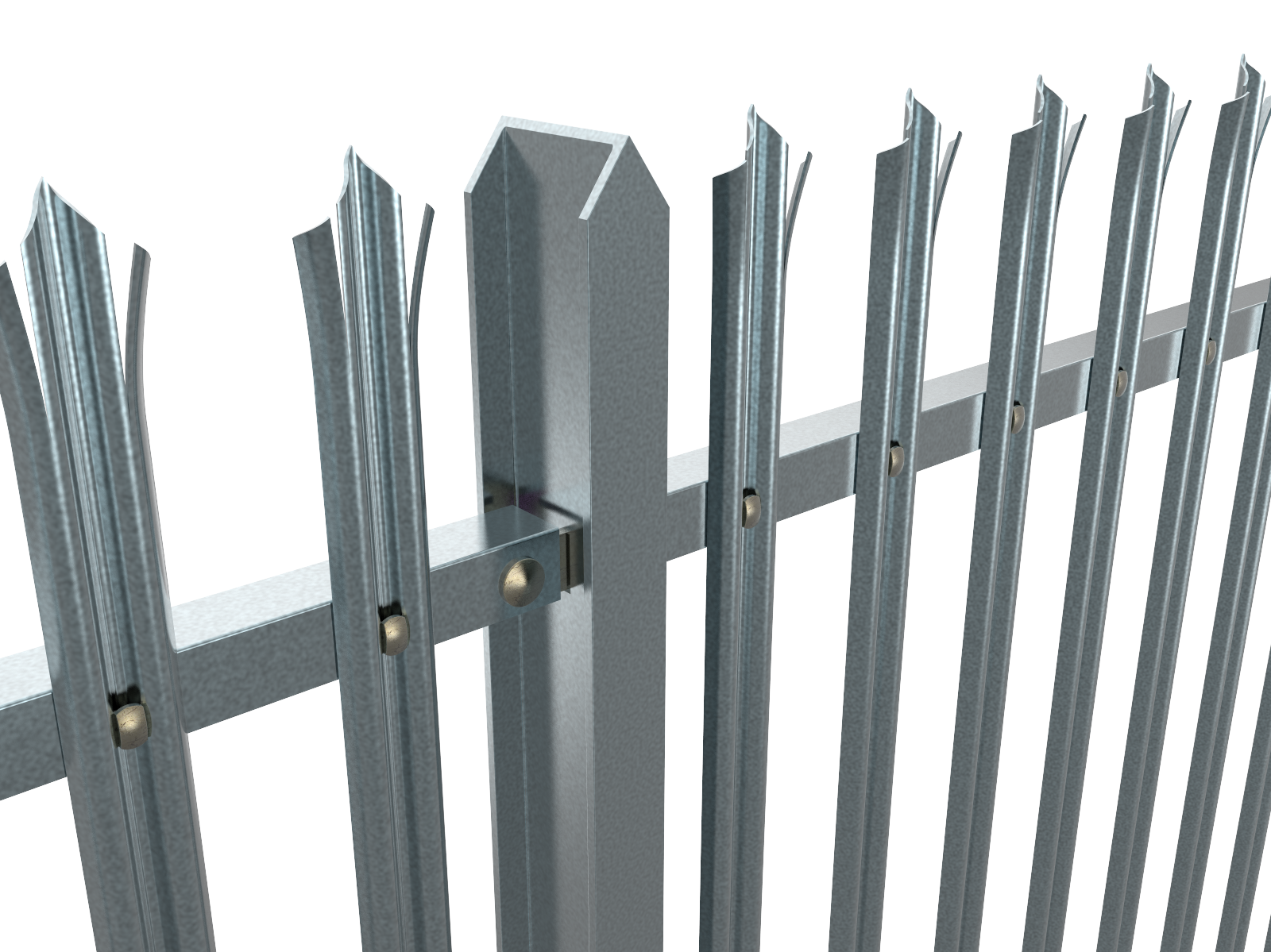
Palisade is bolted together on site rather than dropped in as panels, which is its main practical advantage: a damaged section can be unbolted and replaced on its own, and heights and gate positions can be adjusted as the run goes in. It is the default for industrial yards, compounds and anywhere the primary job is keeping people out.
The trade-off is appearance. Palisade reads as a security fence from a long way off, which is exactly what some clients want and exactly what others will reject.
Palisade kits
Mesh
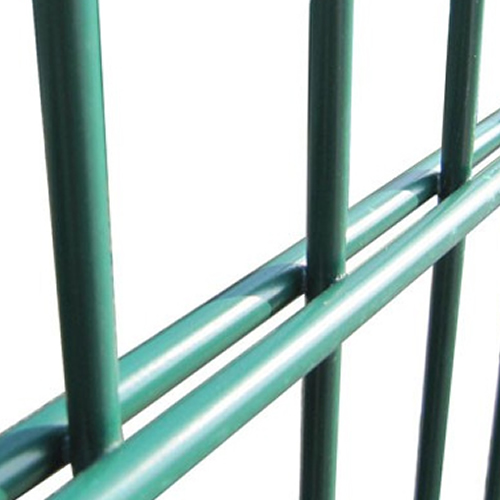
Mesh arrives as rigid welded panels that bolt to posts, so it goes up faster than palisade on a straight run and gives a much flatter, more uniform line. Twin-wire systems are named for their wire diameters — 868 uses heavier wire than 656 and is the one to specify where the fence may be attacked rather than merely climbed.

Side by side
| Palisade | Mesh | |
|---|---|---|
| Visibility through it | Limited | Good |
| Deterrent appearance | High | Moderate |
| Repairing a damaged section | Replace individual pales | Replace the whole panel |
| Following uneven ground | Adjusts as it is built | Steps between posts |
| Typical setting | Yards, compounds, utilities | Schools, sports, commercial frontage |
When the answer is neither
Plenty of boundaries do not need a security fence at all. Where the job is defining a space rather than protecting it — a park, a housing scheme, a school frontage — bow top railings will do the job and look considerably better doing it.
And for a domestic boundary, neither steel option makes sense. Timber or composite is what you want there.
Products covered in this guide

Frequently asked questions
- Is palisade or mesh more secure?
Both can be specified to a high security level — it depends far more on height, fixings and installation than on the system itself. Palisade is harder to climb; heavy twin-wire mesh is harder to cut through cleanly. For a genuinely high-risk site, the fixings and the topping matter more than the choice between the two.
- Which is cheaper, palisade or mesh?
They are close enough that price rarely decides it. Mesh tends to install faster on long straight runs, while palisade is more forgiving on uneven ground and cheaper to repair in small sections. Ask us to price both for your actual run rather than comparing per-metre rates.
- Can I put razor wire on top of either?
Yes, both accept a topping. Bear in mind that razor wire on a boundary the public can reach carries a duty-of-care risk, so it is normally kept to secure compounds rather than street-facing boundaries.