


Railway sleepers and steel sleeper posts: the complete guide
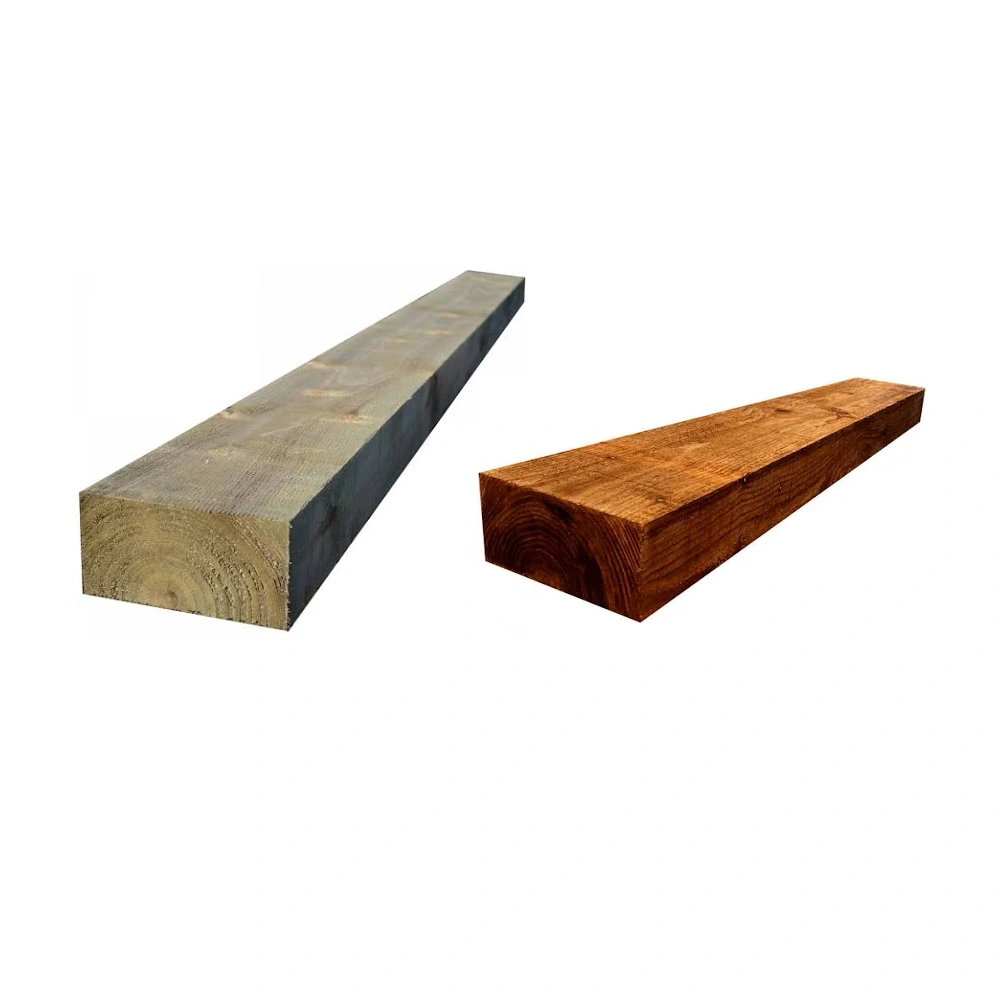
Our sleepers are 195 x 95 x 2395mm, tanalised green or brown. The steel posts that hold them come in three positions, three finishes and ten heights.
A sleeper wall is two products doing two jobs. The sleepers are the wall: heavy softwood baulks stacked flat, one on top of the next. The posts are what stops the wall going anywhere — steel sections set in the ground with a channel down them that the sleeper ends drop into. Get the posts right and the timber does not need a single fixing through it.
This page covers the whole range: what the sleepers actually are, the three post positions, the two steel sections behind them, the three finishes and the ten heights, and how to work out which of each you need.
The sleepers
Ours are 195mm x 95mm x 2.395m. That is a working size rather than a reclaimed-railway size — square-cut, consistent, and light enough for two people to place without a machine. Reclaimed track sleepers are bigger, oilier and wildly variable; these are the modern equivalent people actually build gardens out of.
They come tanalised in two shades, green or brown. Tanalising is pressure treatment: the preservative is forced into the timber under vacuum rather than brushed on, so it is in the wood rather than on it. Green is the raw treated colour and weathers to silver-grey; brown has a pigment added and stays closer to a stained-timber look. Structurally there is nothing between them.
Railway sleepers
| Spec | Value |
|---|---|
| Section | 195mm x 95mm |
| Length | 2.395m |
| Treatment | Tanalised (pressure treated) |
| Shades | Green or brown |
| Courses per metre of height | 5 (5 x 195mm = 975mm) |
Sleepers
The posts: three positions
Every sleeper run needs the ends held. Which post you need depends only on where in the run it sits, and every run needs at least two of them.
Which post goes where
| Post | Where it goes | Steel |
|---|---|---|
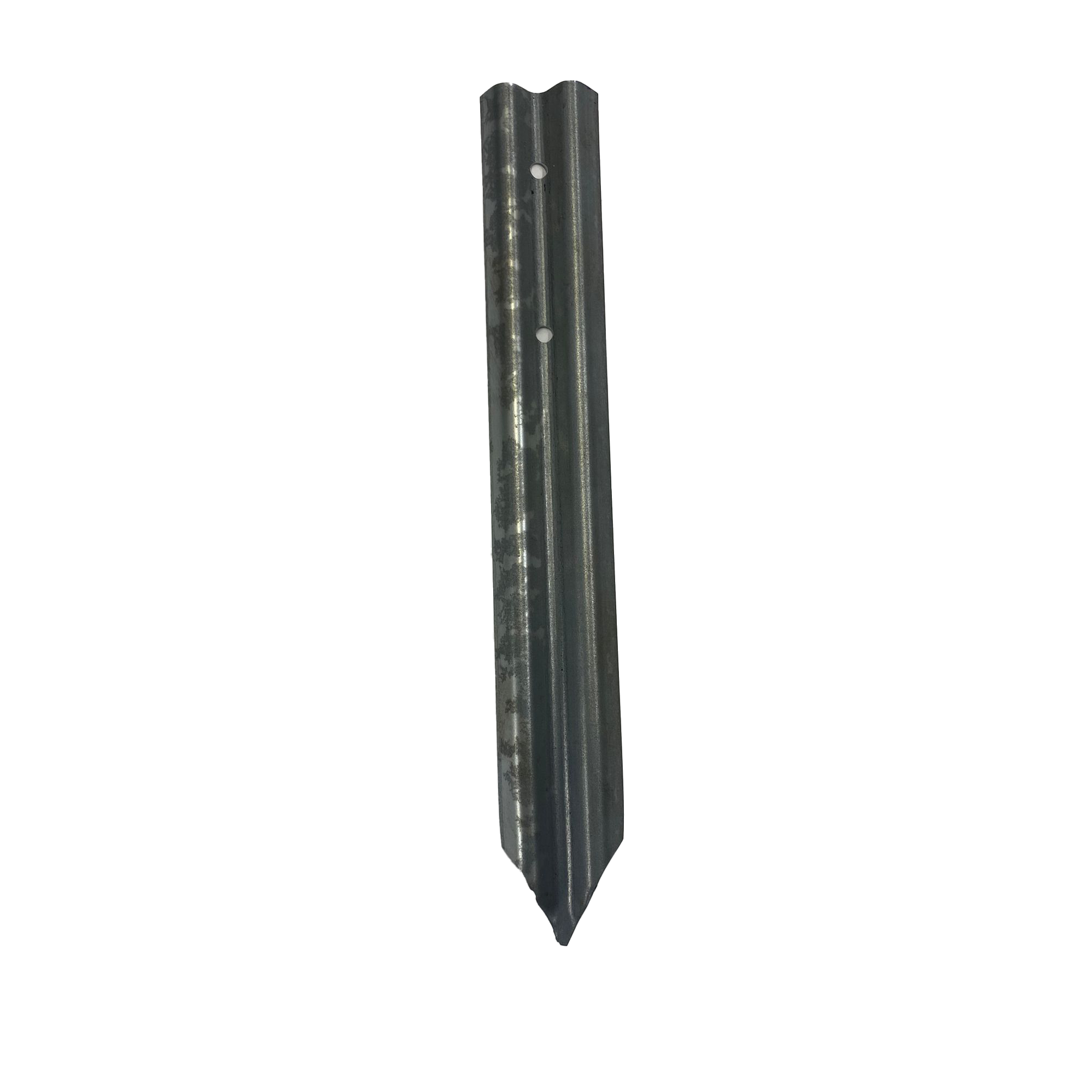
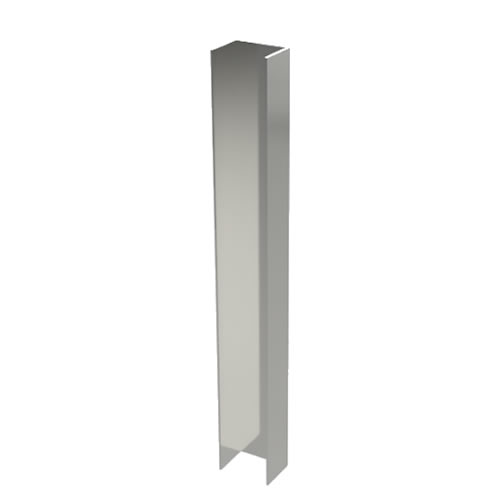
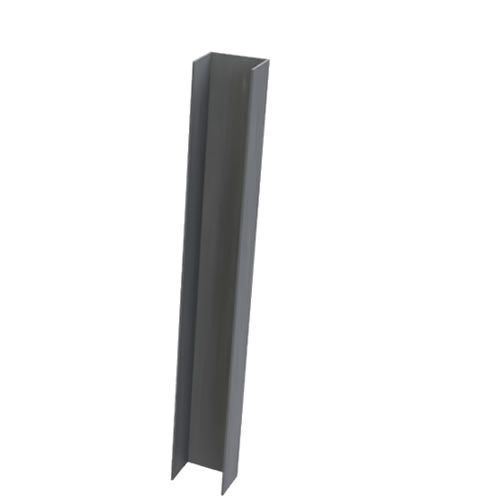
| End | Either end of a straight run | PFC (U) channel 125 x 65 |
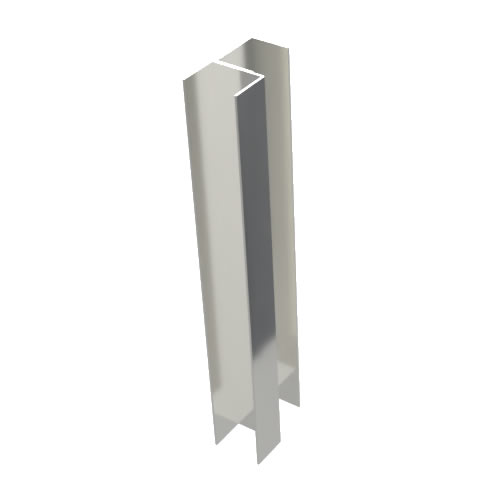
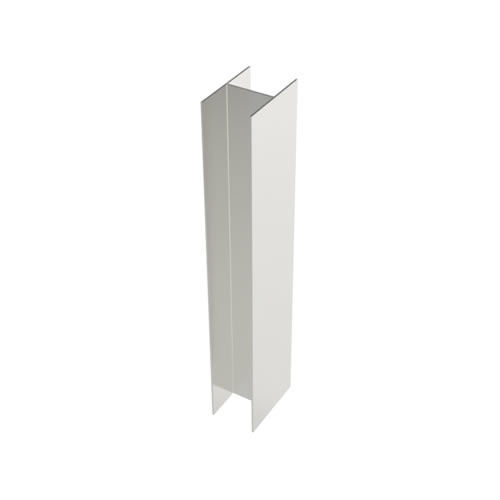
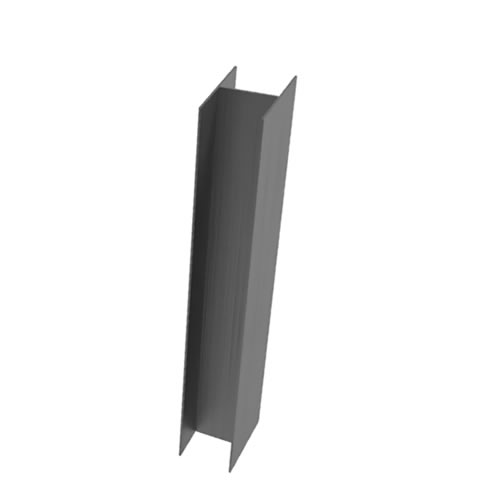
| Intermediate | Every joint between two sleepers | RSJ (H) 117.6 x 64 |
| Corner | Every change of direction | PFC (U) channel 125 x 65 |
The logic is what the section can hold. An intermediate post has sleepers arriving from both sides, so it is an H section — the sleeper ends drop into the channel on each face and meet inside the steel. An end post only has timber on one side, so a U channel does the job. A corner post turns the run through 90 degrees and is built on the same heavier channel section as the end.
Galvanised sleeper posts
Two steel sections, and why they differ
Both sections are structural steel, not a folded pressing. The channel used on the end and corner posts is the heavier of the two — it is carrying the whole end load of the run with nothing on the far side to balance it.
Section detail
| End / Corner | Intermediate | |
|---|---|---|
| Profile | PFC (U) channel | RSJ (H) beam |
| Size | 125 x 65 | 117.6 x 64 |
| Weight | 11.9 kg/m | 8.6 kg/m |
| Web (centre) | 5.2mm | 4.5mm |
| Flange (sides) | 6.8mm | 5mm |
Three finishes
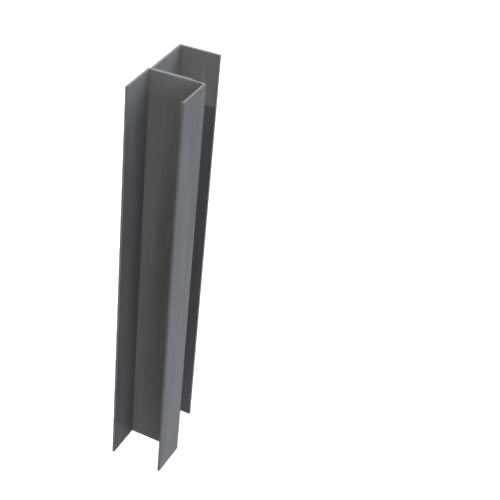
Same steel, same sections, same heights — the finish only changes how long it lasts and what it costs. Raw steel is the cheapest and will start to rust in weeks; galvanised is dipped and left alone for decades; powder coated is galvanising plus a colour coat for anywhere the steel is going to be looked at.
Below ground it makes less difference than people expect, because everything is sitting in concrete. Above ground it makes all of it.
Raw steel
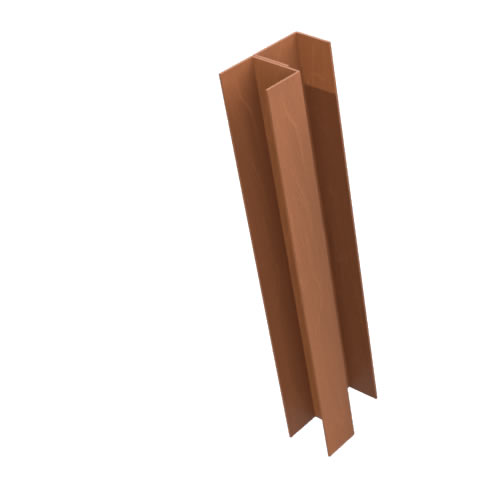
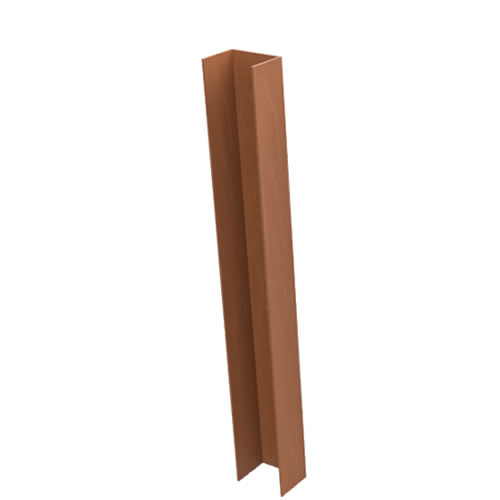

Powder coated
Heights
Every post is available in ten overall heights: 600mm, 900mm, 1M, 1.2M, 1.5M, 1.6M, 1.8M, 2.0M, 2.4M and 3.0M. Overall height is the full length of the steel, so the wall you end up with is that figure minus whatever you bury.
The usual rule of thumb on a retaining post is to put a third of it in the ground, concreted. On a 1.8M post that leaves roughly 1.2m standing, which is six courses of sleeper. Anything genuinely retaining a bank rather than edging a border deserves more than a rule of thumb — see the fitting guide.
Rough working heights
| Post ordered | Approx. above ground at 1/3 buried | Courses of sleeper |
|---|---|---|
| 900mm | 600mm | 3 |
| 1.2M | 800mm | 4 |
| 1.5M | 1.0m | 5 |
| 1.8M | 1.2m | 6 |
| 2.4M | 1.6m | 8 |
| 3.0M | 2.0m | 10 |
Working out what to order
Measure the run, not the sleepers. Sleepers are 2.395m long and lose a little into the channel at each end, so post centres land just under 2.4m. Count one post per joint plus one at each end, then multiply the sleeper count by the number of courses.
If you want it checked before you commit, send us the length, the height you want standing, and whether it is retaining soil or just edging. We will work the post schedule out with you.
Frequently asked questions
- What size are your railway sleepers?
195mm x 95mm x 2.395m, tanalised in green or brown. They are laid flat so each course adds 195mm of height and the wall is 95mm thick.
- Do I need to bolt the sleepers to the posts?
No. The sleeper ends slot into the channel in the post and are held by their own weight. The gap is intentional — it lets the timber expand and shrink through the seasons instead of splitting around a fixing.
- What is the difference between an end, corner and intermediate sleeper post?
Position. Ends go at each end of a run and are a 125 x 65 PFC channel; intermediates go at every joint between two sleepers and are a 117.6 x 64 RSJ, so timber can arrive from both sides; corners turn the run and use the same channel section as the ends.
- How deep should sleeper posts go in the ground?
The common rule of thumb is a third of the overall length, set in concrete — so a 1.8M post gives roughly 1.2m standing. That is a starting point, not a design: a wall retaining more than about a metre of ground should be designed properly.