


Rigid mesh fencing systems: which one to specify
Seven rigid mesh systems, from roll top for play areas to 358 prison mesh for utilities. They install the same way — what changes is the aperture and the wire.
Rigid mesh is welded steel wire supplied as panels that bolt to posts. It is the modern default for commercial and public-sector boundaries: it goes up fast on a straight run, gives a flat uniform line, and you can see through it — which matters anywhere the boundary needs supervising from one side.
We stock seven systems. They all install the same way, and they all take the same clips and insert bolts. What separates them is the size of the hole and the thickness of the wire, and those two numbers decide everything: how hard it is to climb, how hard it is to cut, how much you can see through it and what it costs.
The seven, quickest first
Rigid mesh at a glance
| System | Aperture | Wire | Where it goes |
|---|---|---|---|
| Roll top | Standard mesh | 4.5mm | Sports, play, schools |
| Uniform | Plain grid | 5.5mm / 3.6mm | Boundaries, light commercial |
| Profile (V beam) | 200 x 50mm | 4.5mm | Commercial, stiffened panels |
| 656 twin wire | 200 x 50mm | 6mm / 5mm | Schools, commercial frontage |
| 868 twin wire | 200 x 50mm | 8mm / 6mm | Where the fence gets attacked |
| 358 flat beam | 12.7 x 76.2mm | 4mm | Utilities, substations, high security |
| 358 V beam | 12.7 x 76.2mm | 4mm | The same, where extra stiffness is wanted |
Aperture is the security spec
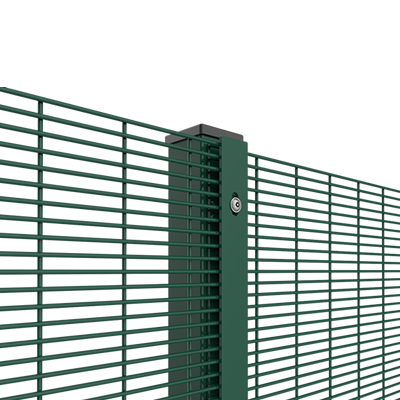
The single number that matters is the size of the hole. A 200 x 50mm aperture on twin wire or profile mesh is a rectangle you can get fingers into but not a toe — it deters climbing without being unfriendly to look at. A 358 aperture of 12.7 x 76.2mm (three inches by half an inch, hence the name) takes fingers out of the equation entirely, and leaves no room to get bolt croppers around a wire.
That is why 358 is called prison mesh and why it costs what it does. If the boundary is protecting cable, substations, plant or anything a determined person would bring tools for, this is the specification. If it is enclosing a car park, it is overkill.

Twin wire: 656 and 868
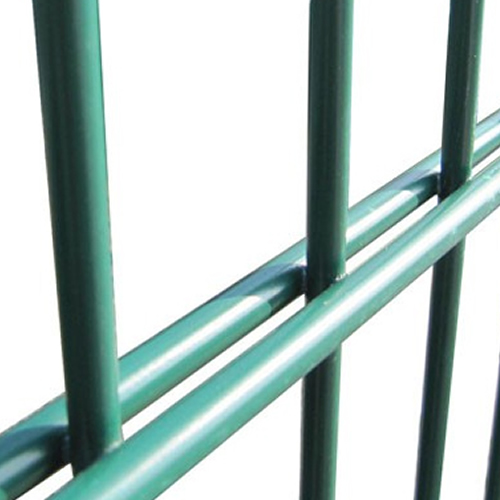
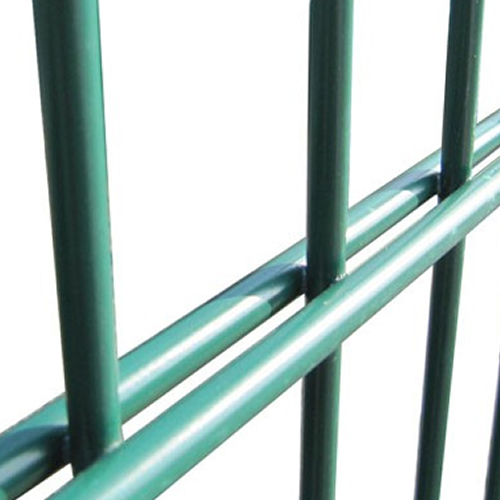
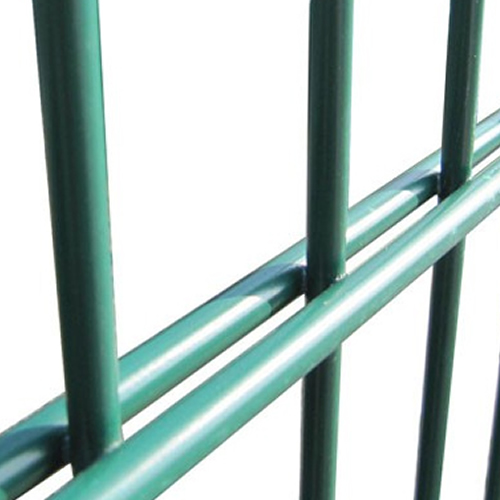
Twin wire mesh puts two horizontal wires either side of each vertical, which makes a panel far stiffer than a single-wire grid of the same weight. The numbers are the wire diameters: 656 is 6mm horizontals with 5mm verticals, 868 is 8mm with 6mm.
656 is the general-purpose commercial and education specification — clean, strong enough, and the one most schools end up with. 868 is what you move to where the fence may be attacked rather than merely climbed: heavier wire takes considerably longer to cut.
Profile mesh
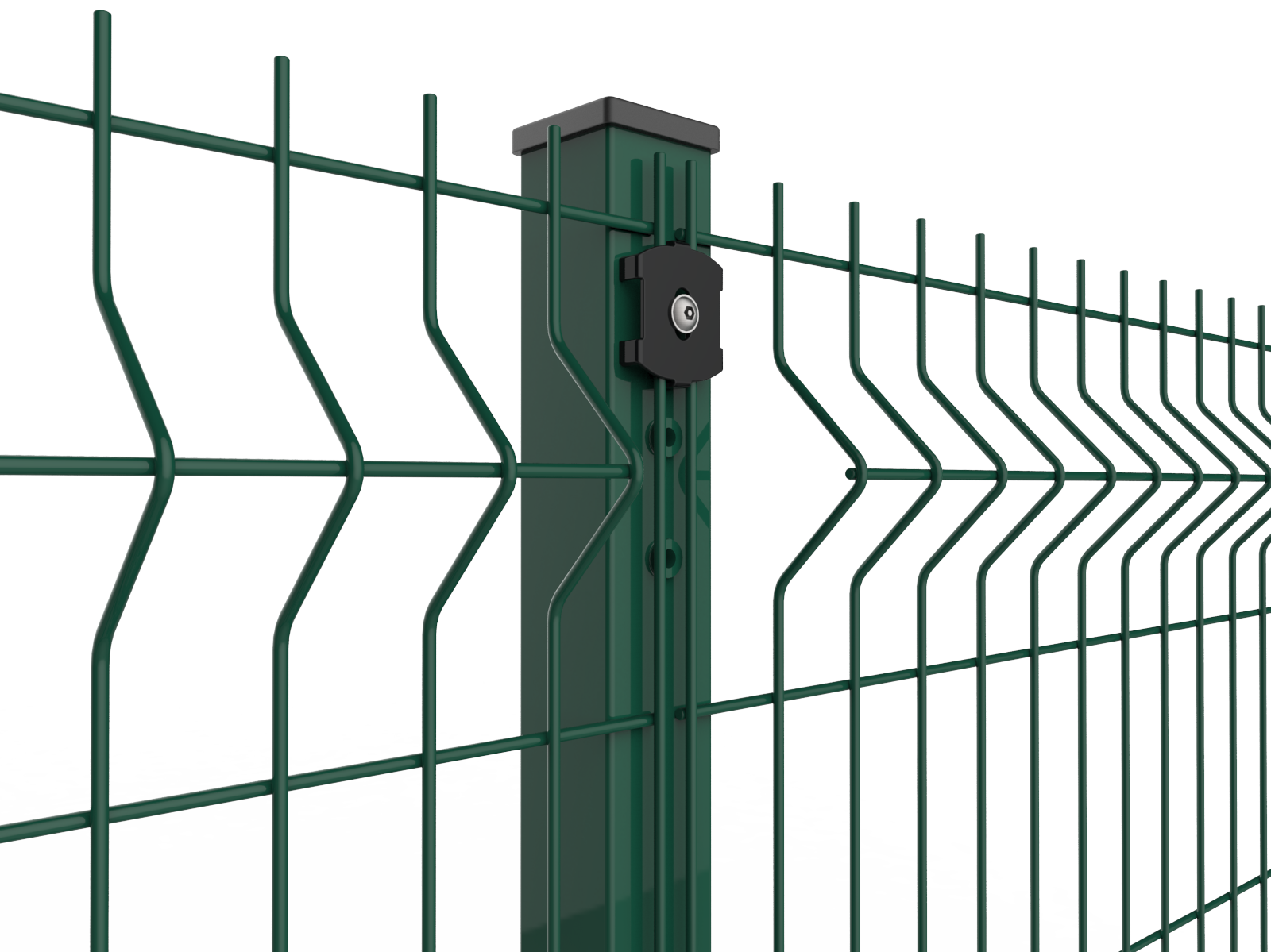
Profile mesh takes a standard 200 x 50mm panel and presses V-shaped beams across it. The folds stiffen the panel considerably, which is why it can run 4.5mm wire and still hold its shape at 3m high. Taller panels get more beams — two at 1.2m, three at 1.8m to 2.4m, four at 3.0m.
Profile mesh
Uniform mesh
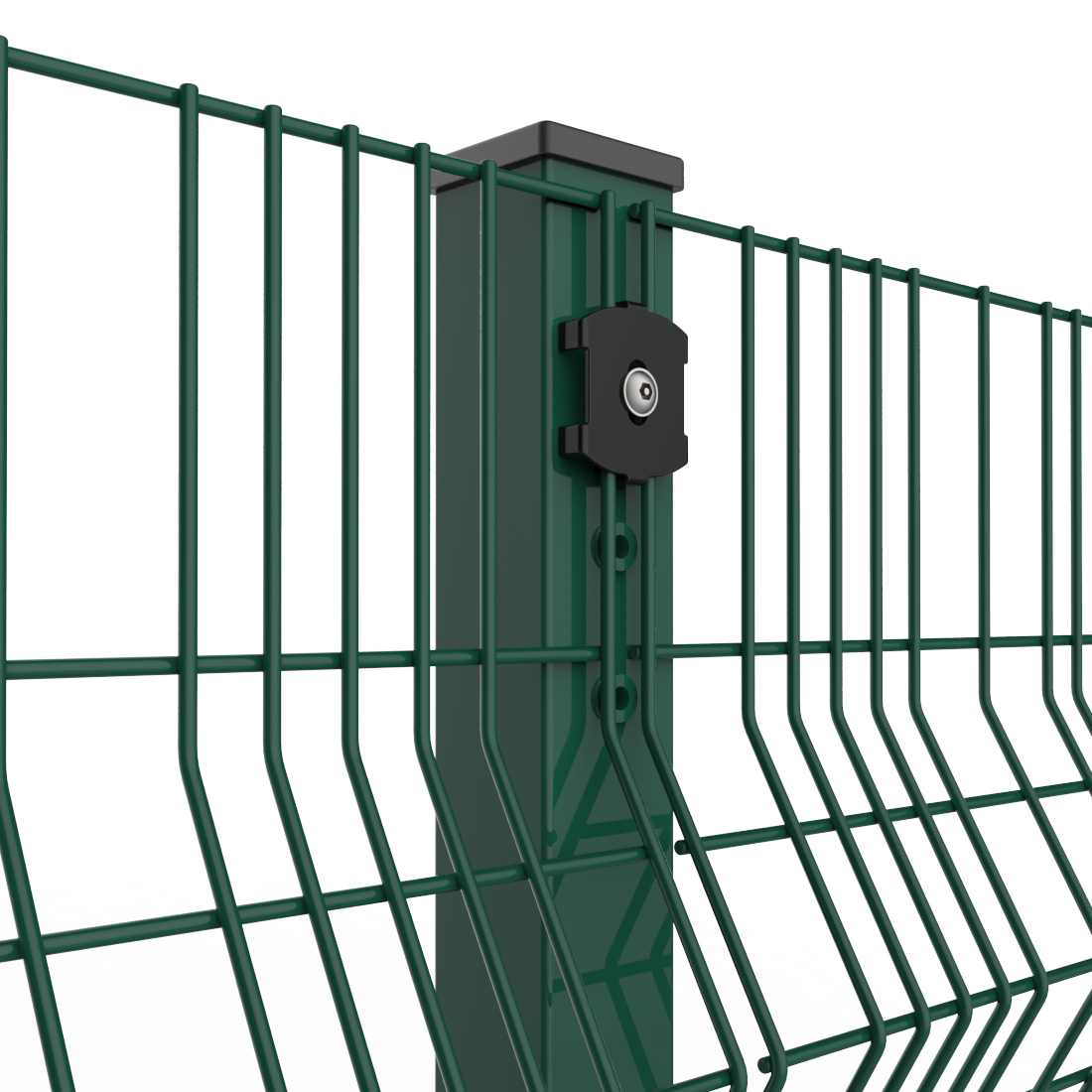
The plainest of the rigid systems: an even grid with no ribs or profiling, on 5.5mm horizontal and 3.6mm vertical wire. It is the value option where a boundary needs enclosing tidily rather than defending, and it looks quieter than profiled mesh on a frontage.

Roll top
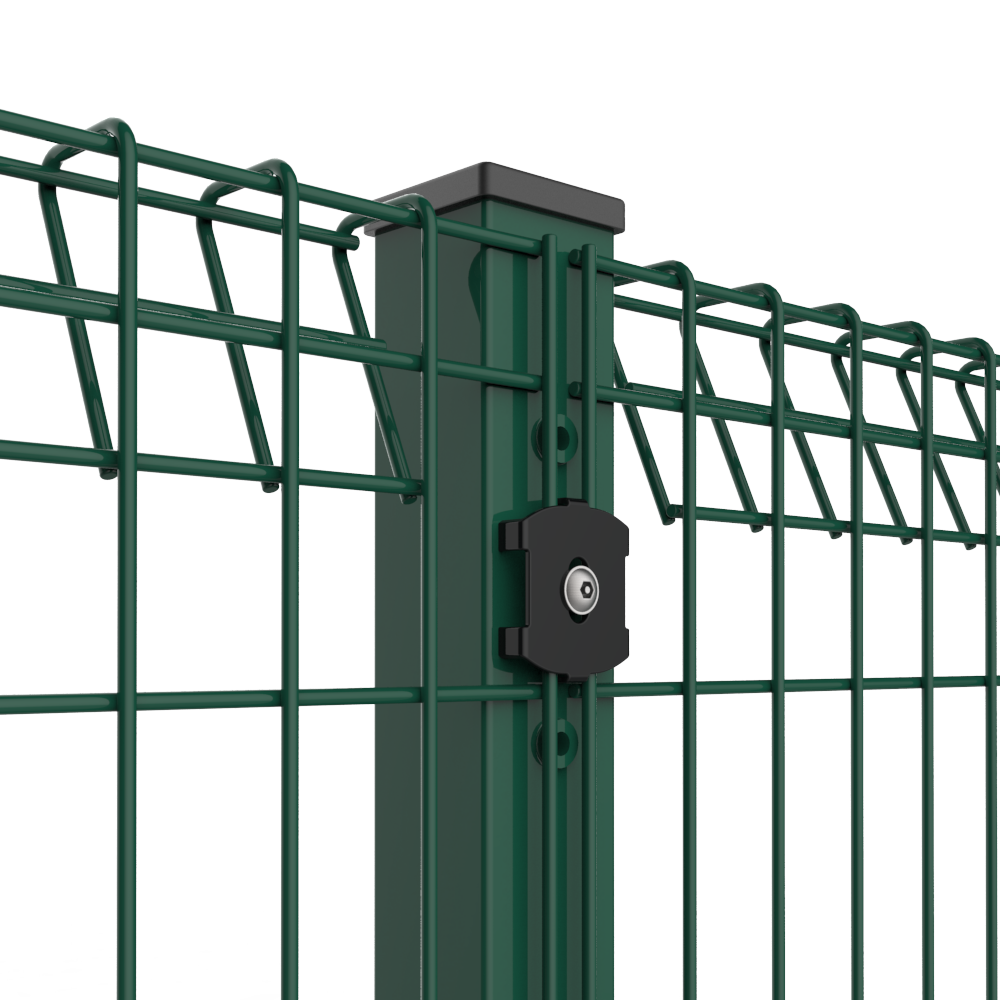
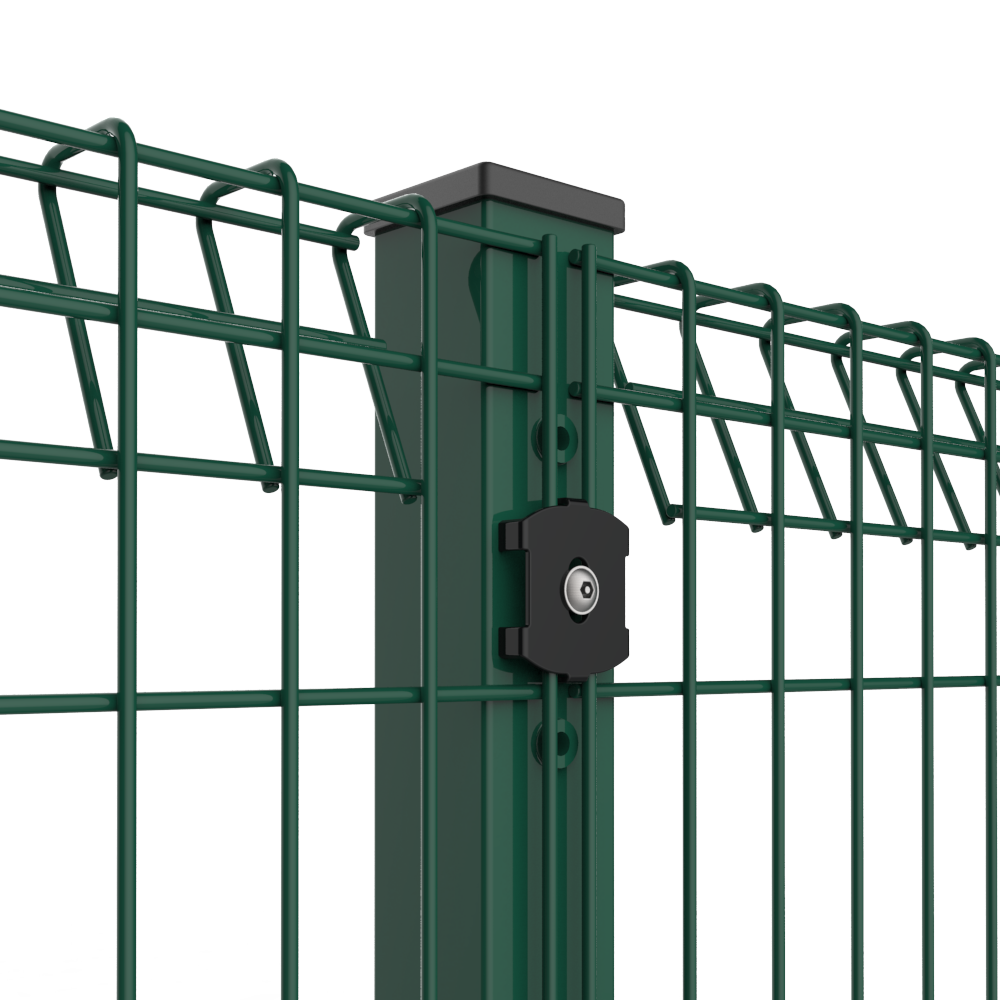
Roll top mesh curls the panel edge into a tube along the top and bottom. Two things follow: the roll stiffens the panel, and it removes the cut wire ends. That second point is why roll top is the specification for sports pitches, MUGAs and play areas — there is nothing sharp at the edge, and a ball comes off it cleanly.

What they have in common
All seven are galvanised steel, powder coated as standard, and supplied as a system: post, panel, clips, insert bolts and post cap. Panels are 3m wide on most systems and 2.5m on the 358 prison mesh and 3m profile. Everything bolts with the same security fixings, which need a mesh security key to undo.
And when mesh is not the answer
If the boundary needs to look hostile rather than tidy, or the ground is uneven enough that stepped panels would look wrong, palisade is the better fence. Mesh steps between posts; palisade adjusts as it is built.
Products covered in this guide
Frequently asked questions
- What is the difference between 358 mesh and twin wire mesh?
The aperture. 358 mesh has a 12.7 x 76.2mm hole — too small for fingers or bolt croppers — which makes it genuinely anti-climb and anti-cut. Twin wire mesh has a 200 x 50mm aperture on heavier wire, which resists climbing well but is a commercial specification rather than a high-security one.
- Which mesh fencing is most secure?
358 prison mesh, in either flat beam or V beam form. The 12.7 x 76.2mm aperture leaves no toe-hold and no room to get a cutting tool around a wire, which is why it is specified for prisons, substations and utility sites.
- How wide are mesh fencing panels?
3m on most of our systems — twin wire, uniform, roll top and profile up to 2.4m. The 358 prison mesh systems and the 3.0m profile system use 2.5m panels.
- Is mesh fencing galvanised and powder coated?
Yes, both as standard across the rigid systems. The steel is galvanised and then powder coated, which is what gives the consistent colour and the long life outdoors.