


How rigid mesh fencing goes together
Post, panel, clips, insert bolts, post cap. Every rigid mesh system we sell assembles the same way — and the two things that catch people are bay count and ground level.
Every rigid mesh system in our range — twin wire, profile, uniform, roll top and both 358 prison mesh systems — goes together the same way. Learn it once and it applies to all of them.
What a bay consists of
A system bay is one post, one panel, the clips and insert bolts for that height, and a post cap. The clip count goes up with height, because a taller panel needs more fixing points: a 1.8m twin mesh bay takes seven clips, a 2.4m bay takes nine.
What varies with height
| System and height | Clips and bolts per bay |
|---|---|
| 656 twin mesh 1.8m | 7 |
| 656 twin mesh 2.0m | 8 |
| 656 / 868 twin mesh 2.4m | 9 |
| 358 prison mesh 1.8m | 5 |
| 358 prison mesh 2.0m | 6 |
| 358 prison mesh 2.4m | 8 |
| 358 V beam 3.0m | 11 |
The sequence
- Set the line and mark the post positions off the panel width — 3m on most systems, 2.5m on 358 prison mesh and 3.0m profile.
- Set the posts, concreted in, checking each against the panel rather than a tape. A panel that does not fit is easier to spot now than after the concrete goes off.
- Offer the panel up between two posts, sitting it at the ground clearance you want.
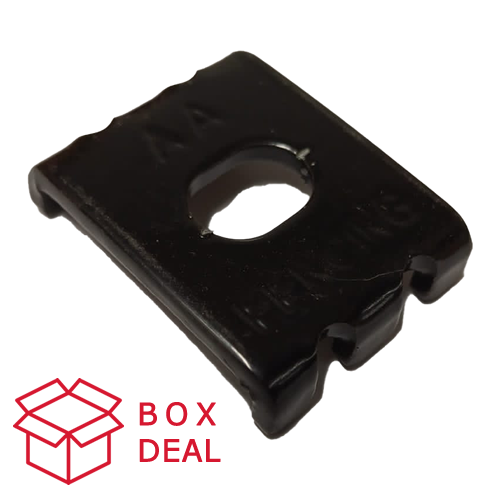
- Fix the clips over the panel wires and through the post, one at each fixing point, and drive the insert bolts.
- Cap the posts.
Security fixings
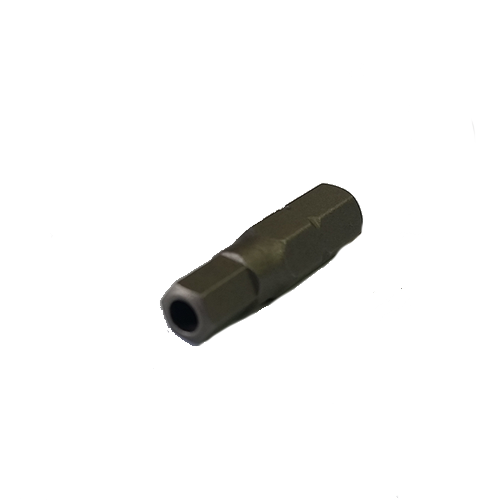
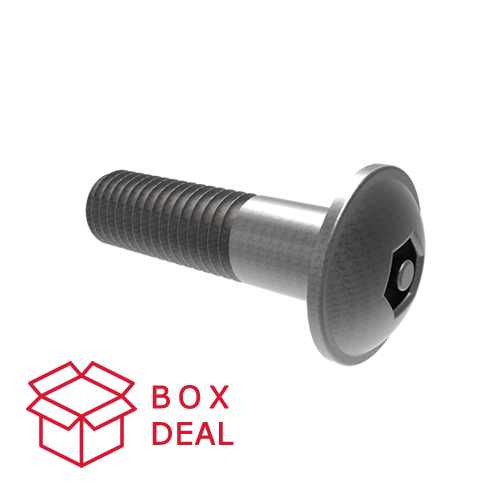
The insert bolts on rigid mesh are security fixings — they need a mesh security key to remove. That is deliberate: a panel fence held on with ordinary bolts can be unbolted from the outside in minutes.
Buy at least two keys. They get lost, and a site with one key and a damaged panel is a site waiting on a delivery.
Fixings and keys
Ground level, and where mesh struggles
Rigid panels are rectangles. On a slope, a run of mesh steps down between posts rather than raking with the ground, which leaves a triangular gap under each panel at the low end. On a gentle slope nobody notices. On anything steep it is both ugly and a way in for anything smaller than a person.
Options are to step the panels and fill under them, to rake the ground level along the fence line, or to accept that palisade — which is built pale by pale on site — handles the slope better. Decide before you order, not on the day.
Raising an existing fence
Post extenders bolt to the top of an existing mesh post and carry an additional panel or a topping, which is far cheaper than replacing a run that has turned out to be too low. Worth knowing before anyone quotes for a whole new fence.
Extending upwards

Counting a run
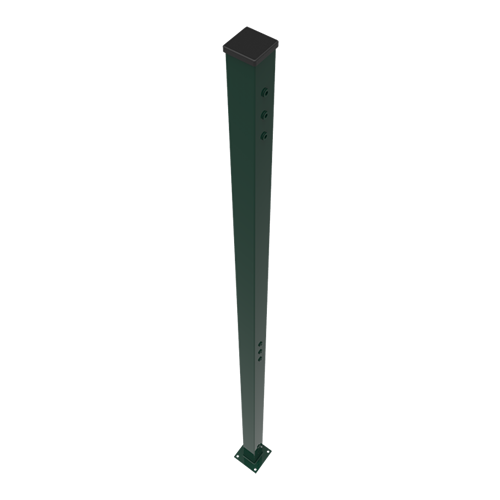
Divide the run by the panel width and round up, then add one post. Twenty bays needs 21 posts. Take gate openings out of the run before you count, and remember 358 panels are 2.5m, not 3m — mixing that up throws the whole order out.
Products covered in this guide
Frequently asked questions
- How do you fix mesh fencing panels to posts?
With clips that fit over the panel wires and bolt through the post using security insert bolts. The clip count varies with panel height — seven on a 1.8m twin mesh bay, nine at 2.4m — and the bolts need a mesh security key to remove.
- What is a mesh security key?
The tool that undoes the security insert bolts used on rigid mesh fencing. Without one a panel cannot be unbolted, which is the point. Order at least two — losing the only key on site is a common way to get stuck.
- How do you fit mesh fencing on a slope?
Rigid panels step down between posts rather than raking with the ground, leaving a gap under the low end of each panel. On a gentle slope that is fine; on a steep one you either fill under the panels, level the fence line, or use palisade instead, which is built on site and follows the ground.
- Can you make an existing mesh fence taller?
Yes. Post extenders bolt onto the top of the existing posts and carry another panel or a topping, which is far cheaper than replacing the run.