


Is razor wire legal in the UK?
Razor wire is legal to buy and fit in the UK. What is not settled is where you put it — occupiers owe a duty of care even to trespassers, and that is where claims come from.
Short answer: yes. There is no law in the UK banning razor wire, no licence to buy it and no permit to fit it. We sell it to anyone. The question that actually matters is not whether you may use it but where you may use it, and that is governed by liability rather than by any dedicated statute.
The law that actually applies
Occupiers' Liability Acts 1957 and 1984
This is the important one. The 1957 Act sets out the duty you owe to lawful visitors. The 1984 Act extends a duty to people who are not visitors at all — trespassers — where you know of a danger, know someone may come into its vicinity, and could reasonably be expected to offer some protection. Deliberately fitting a device designed to injure, in a place someone could reach without meaning to trespass, is precisely the scenario that section was written for.
In practice the duty is discharged by making the danger obvious and putting it out of casual reach: mount it high, sign it clearly, and do not put it anywhere a child could plausibly get to.
Highways Act 1980, section 164
This one names barbed wire rather than razor wire, and it defines barbed wire as wire with spikes or jagged projections. Where such wire is on land adjoining a highway and is likely to injure people or animals lawfully using that highway, the highway authority or local authority may serve notice on the occupier requiring its removal, allowing not less than one month and not more than six months to comply. Ignore the notice and it goes to the magistrates' court.
Read the definition carefully — wire with spikes or jagged projections — and it is hard to argue razor wire falls outside it. Treat section 164 as applying to both.
Where razor wire sits
| Boundary | Verdict |
|---|---|
| Secure compound, depot, yard | Standard practice |
| Substation, utility, plant storage | Standard practice |
| Rear boundary with no public access | Fine, mounted high |
| Boundary along a public footpath | Flat razor wire at height, or don't |
| School, park, playground | No — use rotating spikes |
| Street frontage or low wall | No — use rotating spikes or wall spikes |
What a reasonable occupier does
- Mounts it at 2.4m or above, checked from both sides of the boundary.
- Signs the run at intervals, visible from the approach, before anyone reaches the wire.
- Keeps it off anything climbable that sits alongside — a bin store, a low roof, a wheelie bin left against the fence.
- Reviews it when the ground level changes: a new bank or a raised car park can drop the effective height overnight.
- Tells their insurer it is there.
The alternative that removes the argument
Where a boundary is genuinely public-facing, the cleanest answer is to stop using blades. Rotating spikes defeat a climber by removing anything to grip — the collars spin under load — rather than by cutting. They are made here at AA Fencing precisely because customers kept asking for a deterrent they could put somewhere razor wire had no business being. Wall spikes are the other option on a wall with a flat coping, bolted back from the outer face.
Deterrents without the liability
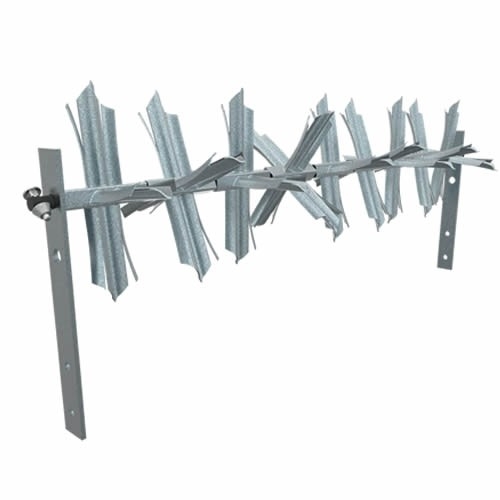
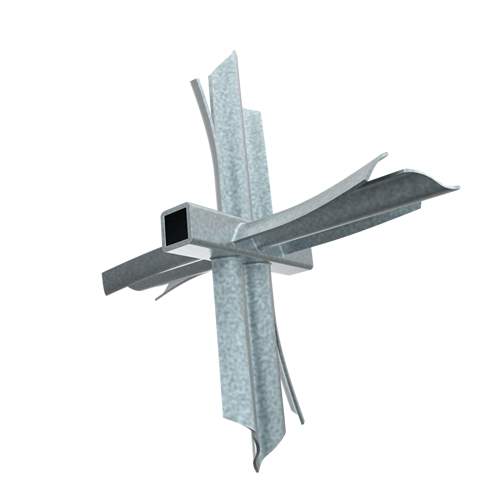
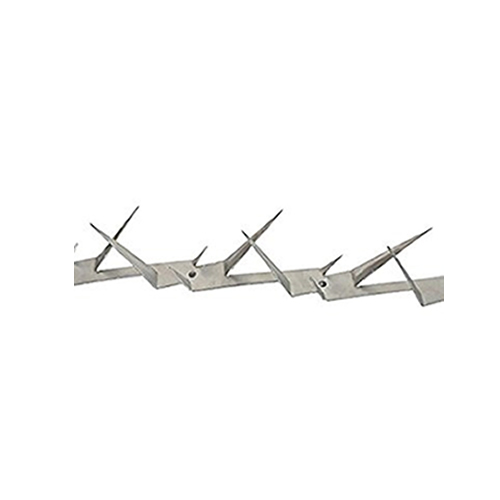
Planning permission
Fitting a topping does not need planning permission in its own right, but the fence it sits on may. The usual thresholds apply — a boundary over 2m generally needs consent, over 1m where it adjoins a highway used by vehicles — and a topping counts towards the overall height. Listed buildings and conservation areas are their own conversation. Check with the local planning department before ordering rather than after.
Products covered in this guide
Frequently asked questions
- Is razor wire illegal in the UK?
No. Razor wire is legal to buy, own and install in the UK, with no licence or permit required. What creates liability is where it is fitted: under the Occupiers' Liability Act 1984 an occupier owes a duty of care even to trespassers, so razor wire within reach of the public — and especially of children — is where claims arise.
- Can I put razor wire on my garden wall?
Legally you can, but it is rarely wise. A domestic wall is usually low enough for someone to reach the wire from the pavement, which is exactly the exposure the Occupiers' Liability Act 1984 covers. Wall spikes bolted back from the outer face, or rotating spikes, give a deterrent without the injury risk.
- Do I need to put up warning signs for razor wire?
There is no statute requiring it, but you should. Signage at intervals along the run, visible before anyone reaches the wire, is the clearest evidence that an occupier took reasonable care to warn of a known danger — which is the test the Occupiers' Liability Acts apply.
- Can the council make me take razor wire down?
Where it adjoins a highway, yes. Section 164 of the Highways Act 1980 lets the highway or local authority serve notice on the occupier of land adjoining a highway to remove wire with spikes or jagged projections that is likely to injure people or animals lawfully using that highway, giving between one and six months to comply.