


Barbed wire
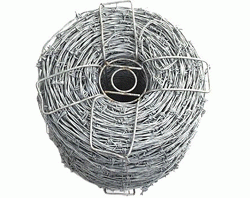
Galvanised line wire with barbs twisted in at intervals, strained between posts. The cheapest fence topping there is, and the standard on agricultural boundaries.
Also called: barb wire, barbed wire coil
Barbed wire is line wire with sharp barbs crimped in at intervals along the strand. It goes up with nothing more than posts, wire and staples, which is why it has been the default agricultural topping for well over a century and why it is still the cheapest way to make a boundary unwelcoming.
As security it is modest. Three strands above a fence slow a climber down; they do not stop one, and anyone arriving equipped will be over barbed wire in under a minute. Where there is real value behind the fence, razor wire is the specification.
The legal catch
Barbed wire carries a constraint that most toppings do not. Under section 164 of the Highways Act 1980, where wire with spikes or jagged projections is on land adjoining a highway and is likely to injure people or animals lawfully using that highway, the highway authority or local authority may serve notice on the occupier requiring its removal — allowing not less than one month and not more than six months to comply.
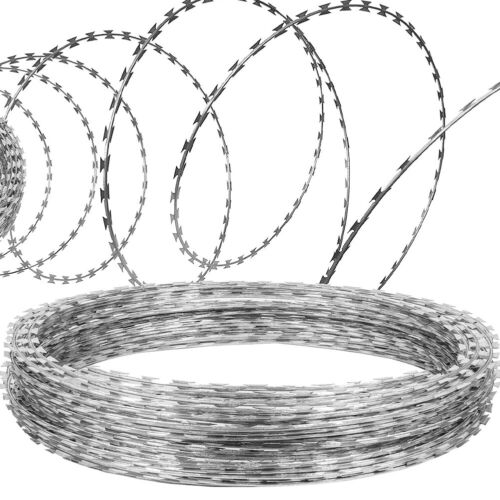
Ours is supplied galvanised on a 100m coil weighing around 10kg.
-1704879563980.jpg)
Frequently asked questions
- Is barbed wire legal in the UK?
Yes, with one restriction that matters. Section 164 of the Highways Act 1980 lets the highway or local authority serve notice on the occupier of land adjoining a highway to remove barbed wire that is likely to injure people or animals lawfully using that highway, giving between one and six months to comply.