


Concertina, flat or tape: picking the right razor wire
Three formats, three jobs. Coil diameter, whether it overhangs a footpath and how much bracket work you fancy will decide it faster than any spec sheet.
Razor wire is sold in three formats and people default to the one they have seen on television. That is usually concertina, and it is usually right — but not always, and the times it is wrong tend to be expensive to discover after the brackets are up.
Concertina: the default
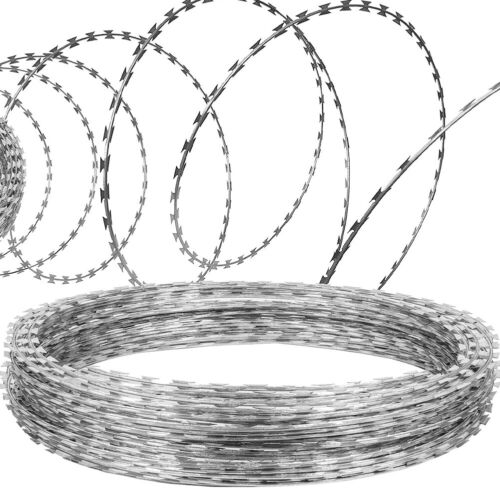
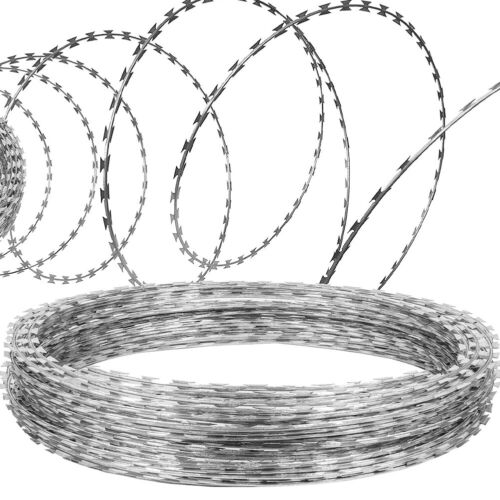
The coil everyone pictures, supplied compressed and stretched along the fence line. We stock two diameters, 450mm and 630mm, both in 10m rolls.
The diameter is the decision. 450mm is the general-purpose size for a yard or a rear boundary — enough of a barrier to deter, small enough not to dominate the fence. 630mm is what goes on a boundary that is being attacked rather than merely climbed: the wider coil means a longer reach across it, so getting past requires either a lot of time or a lot of kit.
Concertina coils
Flat razor wire: when there is a pavement
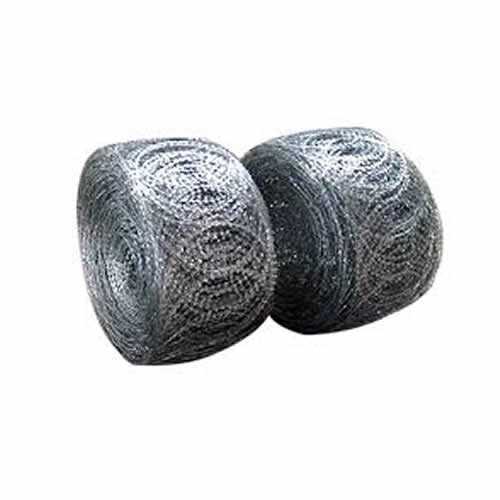
Flat razor wire is newer to the UK and solves a specific problem. Traditional concertina bulges out from the fence, and if the fence has a footpath alongside, that overhang is hanging over people. Flat razor wire sits in the plane of the fence instead — same blade profile, same deterrent, no overhang.
It is also cheaper to install. There is no 90-degree bracket work on top of the run; a flat bracket to fix to is enough, and the wire is tensioned through with a line wire at each fixing point. It comes in 500mm and 700mm widths and opens to roughly 10m.
Flat razor wire
Barbed tape: the middle option
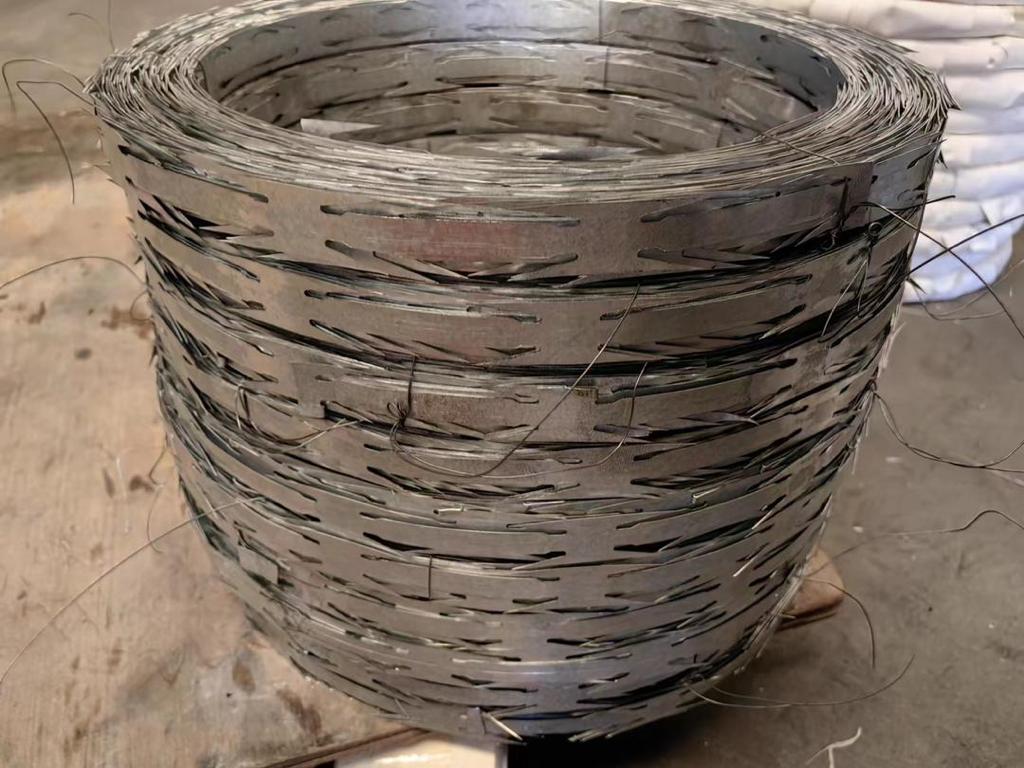
Barbed tape is razor wire's blade profile supplied flat on a 100m roll, run in strands like barbed wire rather than as a coil. It costs a fraction of concertina per metre of boundary and looks far less aggressive from a distance.
It is the right answer when barbed wire has stopped deterring anybody but a full concertina coil would be over the top for the site — a builders' yard, a storage compound, the back of a retail unit. It is not a substitute for concertina where the threat is serious.
Barbed tape
Quick pick
| Format | Supplied as | Choose it when |
|---|---|---|
| Concertina 450mm | 10m roll | General security boundary, no public alongside |
| Concertina 630mm | 10m roll | High-value site, boundary likely to be attacked |
| Flat razor wire | 500mm or 700mm, opens to ~10m | Footpath alongside, or overhang is a problem |
| Barbed tape | 100m roll | Upgrade from barbed wire, run in strands |
Before you order
Two things catch people out. The first is coverage: a 10m roll of concertina covers about 10m of fence, not more. It can be stretched further, but the coils then open into gaps big enough to work through — so order to the run length plus a bit for corners, and resist the temptation to save a roll.
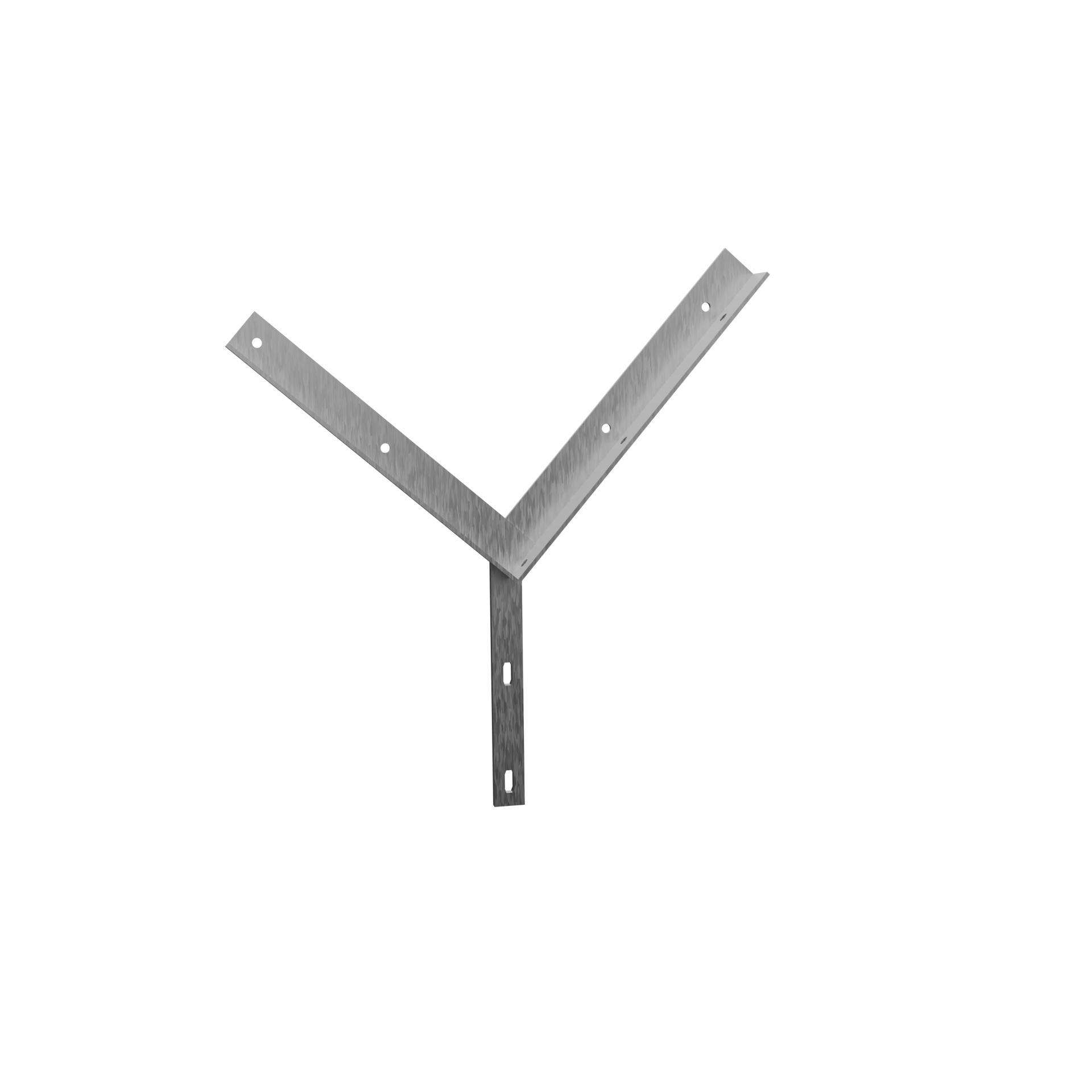
The second is brackets. Every post needs one, and the type decides the profile: straight angle brackets carry a coil directly above the line, Y brackets split it into two arms so it can be canted outward, inward, or both. Work that out before ordering the wire, because changing your mind afterwards means taking the wire down again.
-1704879563980.jpg)
Products in this article
Frequently asked questions
- What is the difference between 450mm and 630mm razor wire?
The coil diameter, which sets how wide a barrier the wire forms. 450mm is the general-purpose size for yards and rear boundaries; 630mm creates a much wider obstacle and is specified where the boundary is likely to be attacked rather than simply climbed. Both come in 10m rolls.
- Is flat razor wire as good as concertina?
As a deterrent, close to it — the blade profile is the same. What it gives up is the width of the barrier a coil creates; what it gains is that it does not overhang the fence line, so it suits boundaries with a footpath alongside, and it is quicker and cheaper to install because it needs no 90-degree bracket work.
- How much razor wire do I need?
Measure the run and order that length plus an allowance for corners and returns. A 10m concertina roll covers about 10m — stretching it further opens gaps a climber can work through. Allow one bracket per fence post.