


Razor wire or barbed wire: which to put on top
Barbed wire slows a climber; razor wire stops most from trying. The choice comes down to what is behind the fence and who walks past the front of it.
These two get treated as interchangeable and they are not. Barbed wire is a livestock product that ended up on security fences because it was there. Razor wire was designed from the start to stop people. They cost different money, they carry different risks, and they suit different boundaries.
What each one actually is
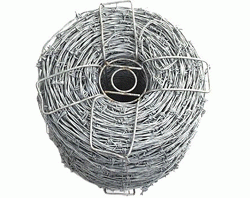
Barbed wire is galvanised line wire with barbs twisted in at intervals, run in strands and tensioned between straining points. Ours comes on a 100m coil weighing about 10kg. You need posts, wire and staples and nothing else, and anyone who has strained a fence can put it up.
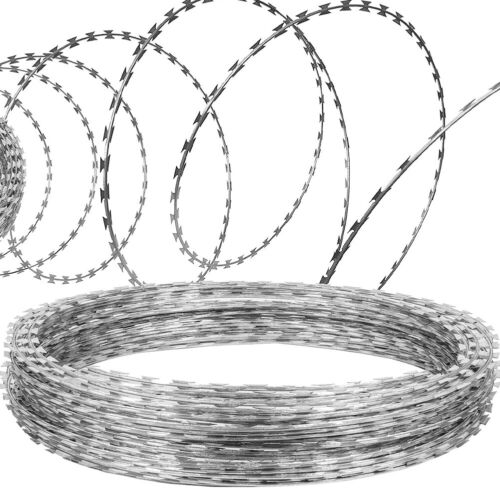
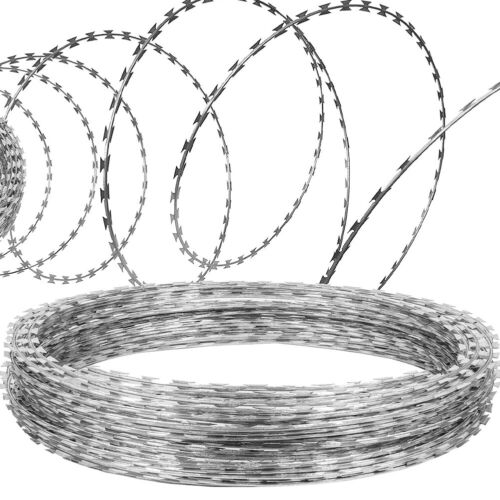
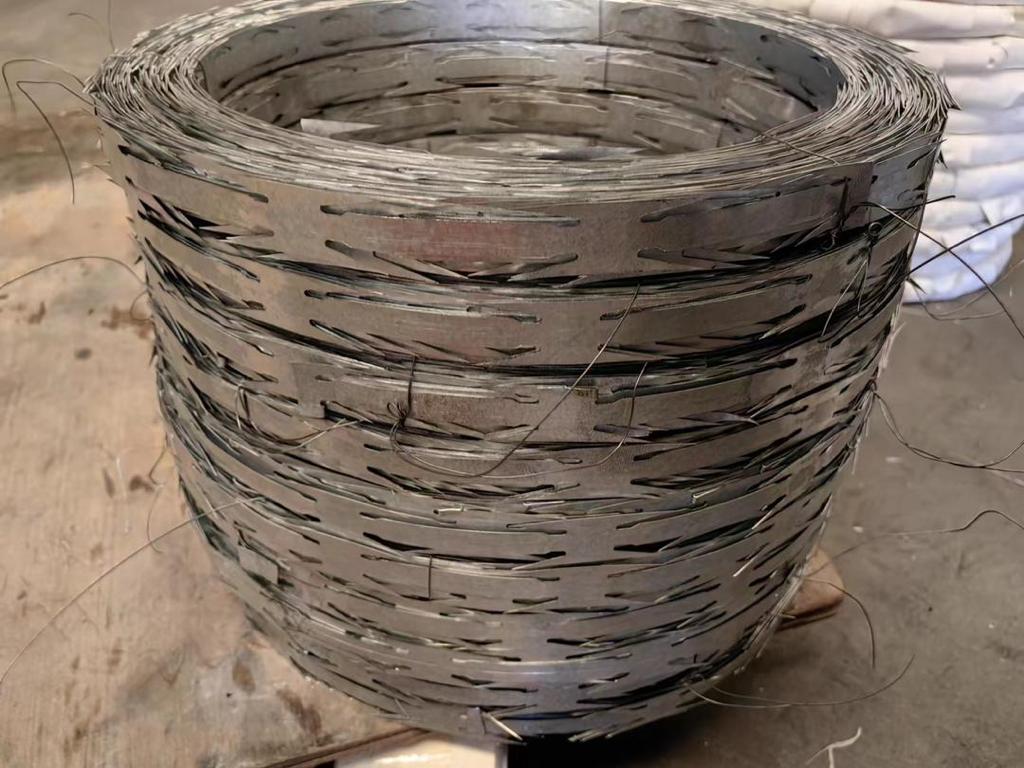
Razor wire is a different animal: a steel tape stamped into a row of blades and crimped around a core wire. It comes as a concertina coil, in 450mm or 630mm diameters on 10m rolls, or flat on a 100m roll as barbed tape. The blades are shaped to hook and hold rather than to cut cleanly, so working through it takes time and does damage on the way.
Head to head
| Barbed wire | Razor wire | |
|---|---|---|
| What it does | Slows a climber | Deters the attempt entirely |
| Time to get through | Under a minute with gloves | Slow, and costly in injuries |
| Cost per metre | Lowest of any topping | Several times higher |
| Fitting | Strain between posts | Brackets, tensioning, gauntlets |
| Typical site | Farms, rear boundaries, yard walls | Depots, substations, compounds |
| Public-facing boundary | Restricted next to a highway | Avoid entirely |
When barbed wire is the right call
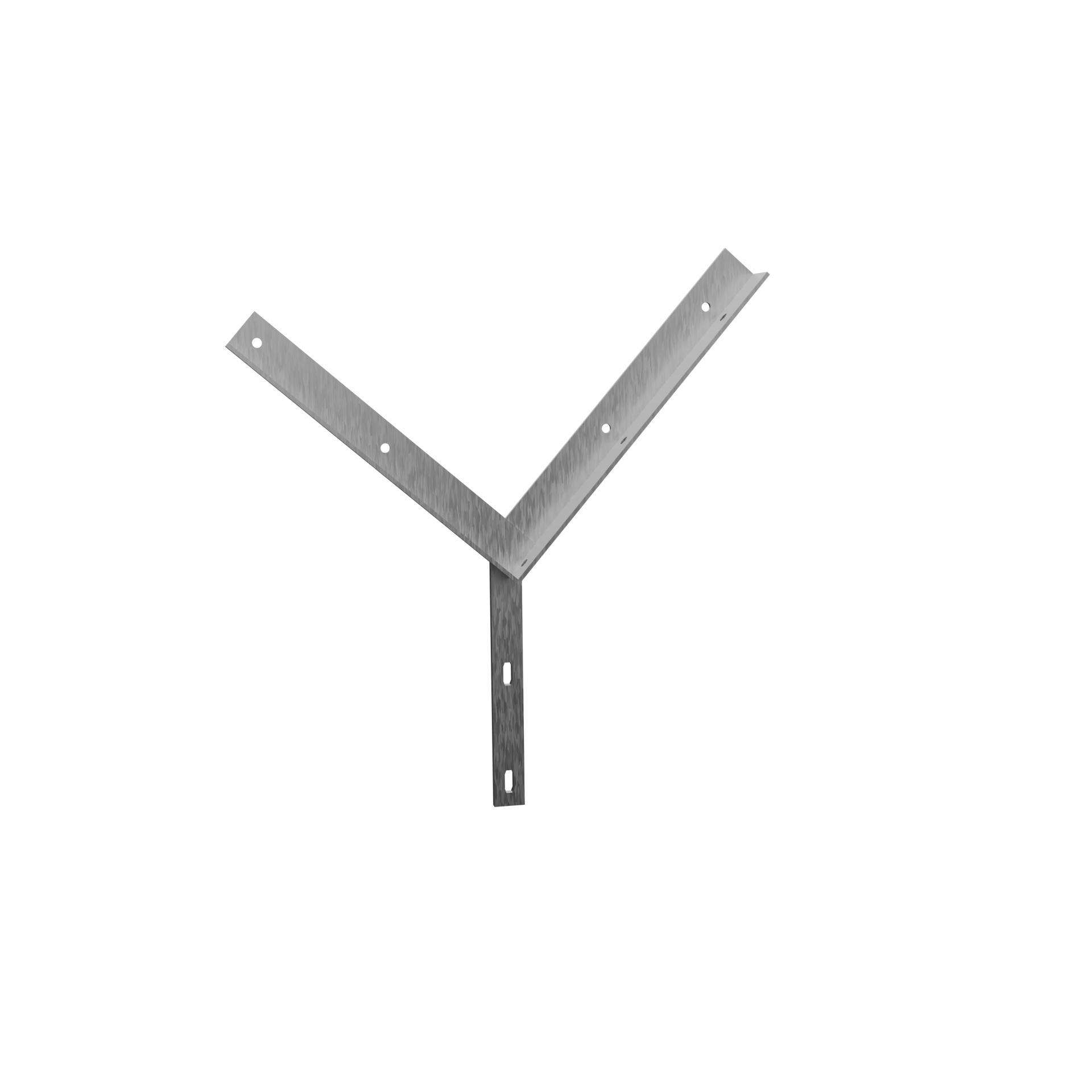
If the risk is opportunistic — someone taking a shortcut, an animal getting out, a boundary that needs marking as unwelcoming rather than defending — barbed wire does the job for a fraction of the cost. Three strands on cranked arms above a stock fence is a proven, sensible piece of specification. It is also the only topping most people will put up themselves without a second thought, which counts for something on a long agricultural run.
Barbed wire
When it has to be razor wire
Once there is real value behind the fence — plant, cable, fuel, stock worth stealing to order — barbed wire stops being a deterrent and starts being a formality. Anyone turning up equipped will be over it. Razor wire changes the calculation because getting through it is slow enough that the attempt itself becomes the risk.
Between the two sits barbed tape: razor wire's blade profile supplied flat on a 100m roll, run in lines like barbed wire. It is the upgrade path when barbed wire is not deterring anyone but a full concertina coil would look like overkill.
Razor wire and barbed tape
The bit people forget
Barbed wire has its own legal constraint that razor wire does not: under section 164 of the Highways Act 1980, barbed wire on land adjoining a highway can be declared a nuisance if it is likely to injure people or animals lawfully using that highway, and the council can serve notice requiring its removal. Razor wire is not named in that section, but the general duty of care under the Occupiers' Liability Acts applies to it just as firmly — and applies to trespassers too.
The third option
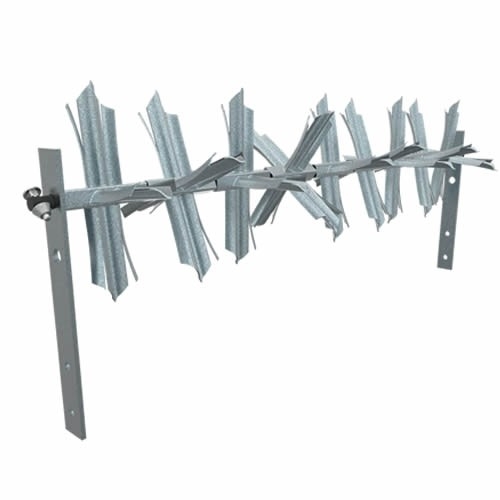
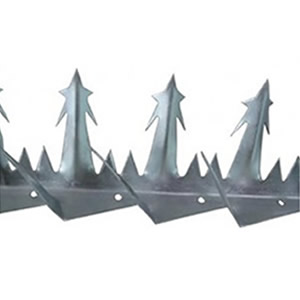
If the honest answer is that you want the deterrent without the injury risk — a boundary the public walks past, a school, anything where a child could reach it — neither wire is right. Rotating spikes give the deterrent through mechanics rather than blades: the collars spin under load so there is nothing to grip, and they will not cut a passer-by.
The safer deterrent
Products covered in this guide
Frequently asked questions
- Is razor wire better than barbed wire?
For security, yes — razor wire takes far longer to get through and deters most attempts outright, where barbed wire can be crossed in under a minute by someone with gloves. Barbed wire is still the better buy for agricultural and rear boundaries, where the job is marking a line rather than defending value.
- Can I use barbed wire next to a road or footpath?
Only carefully. Section 164 of the Highways Act 1980 lets the highway or local authority serve notice on the occupier to remove barbed wire on land adjoining a highway where it is likely to injure people or animals lawfully using that highway, giving between one and six months to comply. Keep it well back and well above head height, or use a topping that has no exposed points.
- How much does razor wire cost compared to barbed wire?
Several times more per metre of boundary covered — a 100m coil of barbed wire covers ten times the run of a 10m razor wire roll. The comparison that matters is not per metre but per site: on a boundary protecting real value, razor wire is cheap next to one break-in.