


What actually stops someone climbing your fence
Height alone does not stop anyone. What stops people is a boundary with nothing to grip, nothing to stand on and no quiet corner to work in — the topping is only part of it.
Customers ring us about toppings after a break-in, and the conversation almost always starts in the same place: they want razor wire, and they want it on the bit of fence that got climbed. Sometimes that is right. More often the fence did not fail because it lacked blades on top.
People do not climb fences, they climb what is next to them
Walk your boundary and look for what somebody could stand on. A wheelie bin. A pallet stack. A bin store roof. A parked trailer. A skip that has been in the same corner for two years. Almost every climbed fence we go out to look at has something within a metre of it that turned a 2.4m obstacle into a 1.2m one.
Moving the bins is free. It is also, on a lot of sites, worth more than anything you can bolt to the fence.
Grip is what matters, not height
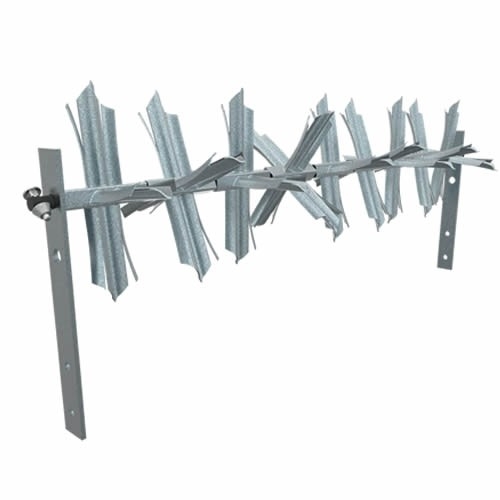
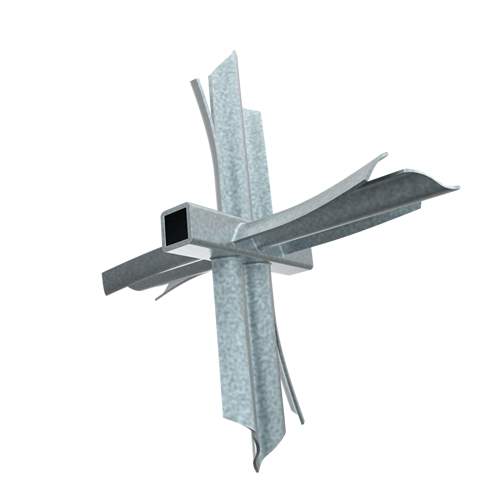
A fence gets climbed at the top rail, because that is the only thing on it worth holding. This is why mesh with a flat top edge and no rail is harder to get over than a taller fence with a comfortable handhold, and why rotating spikes work: the collars spin under load, so the hand that reaches the top finds nothing that stays still.
It is also why a topping fitted flush to the fence line does less than one that overhangs the approach. The overhang forces the climber to reach out and around rather than straight up, at exactly the point where they have no leverage.
Toppings that remove the grip
Time and noise beat everything
Nobody wants to be on your fence for four minutes. The value of razor wire is not that it is impassable — it is that getting through takes long enough to be noticed, and costs enough in injuries to not be worth it. That is the same logic behind heavier mesh, snap-off fixings and bolt-through panels: none of them are unbreakable, all of them cost time.
Which is why the honest question when specifying a topping is not "how sharp" but "how long does this hold someone up, and is anyone going to be watching in that time?" A camera and a sensor light do more for a boundary with a decent fence than blades on a boundary nobody looks at.
The corner nobody looks at
Perimeters get attacked at their weakest point, and the weakest point is always where nobody can see. The back corner behind the container. The gate that gets propped open in summer. The place where the ground falls away and the fence height quietly loses 400mm.
Spend the money there first. A boundary is only as good as its worst three metres, and putting the best topping on the front while the back corner stays dark is a way of feeling secure rather than being it.
So when is razor wire the answer?
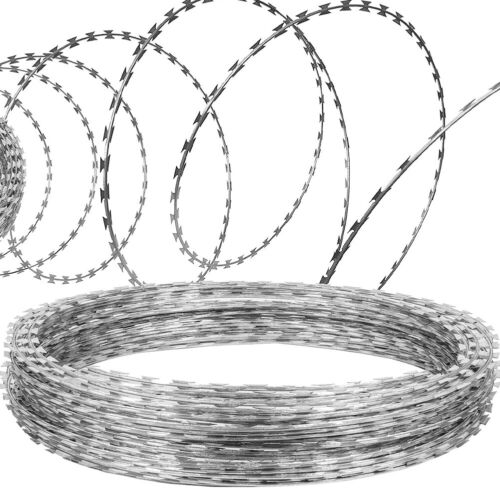
When the fence is already tall enough, the ground alongside is clear, the fixings are right, and there is genuinely something behind the boundary worth the effort of stopping. At that point a topping is the last increment, and razor wire is the strongest one available — provided the boundary is not somewhere the public can reach it.
If it is, rotating spikes give most of the deterrent with none of the argument. We make them here for exactly that reason.
Products in this article
Frequently asked questions
- What is the most effective anti-climb fence topping?
For a secure compound, concertina razor wire — it takes the longest to get through and deters most attempts outright. For a boundary the public can reach, rotating spikes, which defeat a climber by removing anything to grip rather than by cutting. The right answer depends far more on who walks past the fence than on how secure the site is.
- Does making a fence taller stop people climbing it?
Only up to a point. Beyond about 2.4m, height gives diminishing returns compared with removing handholds and clearing whatever sits alongside the fence to climb from. A 2.4m fence with a bin against it is a 1.2m fence.