


Chain link fencing: when it still makes sense
The cheapest way to enclose a large area, and still the right answer for it. What you need beyond the roll — strainers, line wire, cleats — and where it falls short.
Chain link has been quietly out of fashion for twenty years while rigid panel mesh took over, and for boundaries that need to look like anything it deserved to be. But for enclosing a large area cheaply it has never been beaten, and that job still exists.
Where it earns its place
- Large areas where cost per metre is the deciding factor — playing fields, reservoirs, allotments, agricultural compounds.
- Temporary or semi-permanent enclosures.
- Boundaries that follow uneven or curving ground, where rigid panels would step badly.
- Matching or repairing existing chain link, of which there is a great deal about.
Where it does not belong is anywhere security matters. Chain link can be cut with hand tools in seconds and climbed easily — the diamond weave is a ladder. If somebody is going to attack the boundary, this is the wrong fence.
Chain link and weld mesh rolls
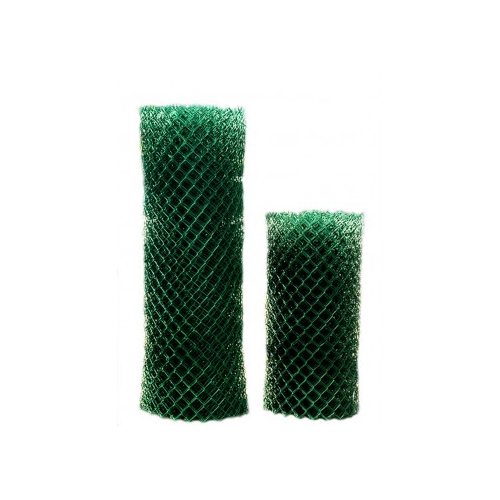
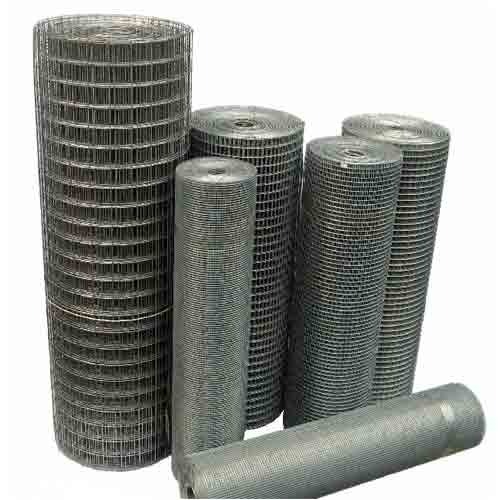
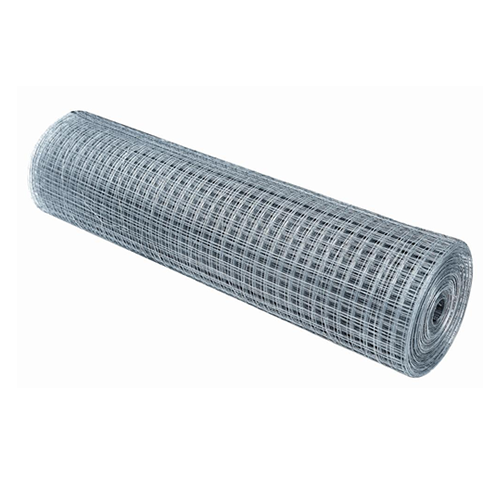
It is a system, not a roll
The mistake with chain link is ordering the mesh and nothing else. The roll carries no load on its own — it is strained between posts, and the straining is what makes it a fence rather than a curtain.
Posts
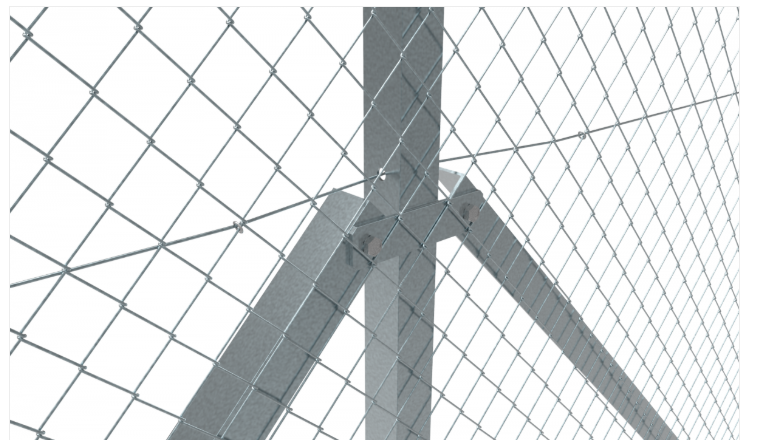
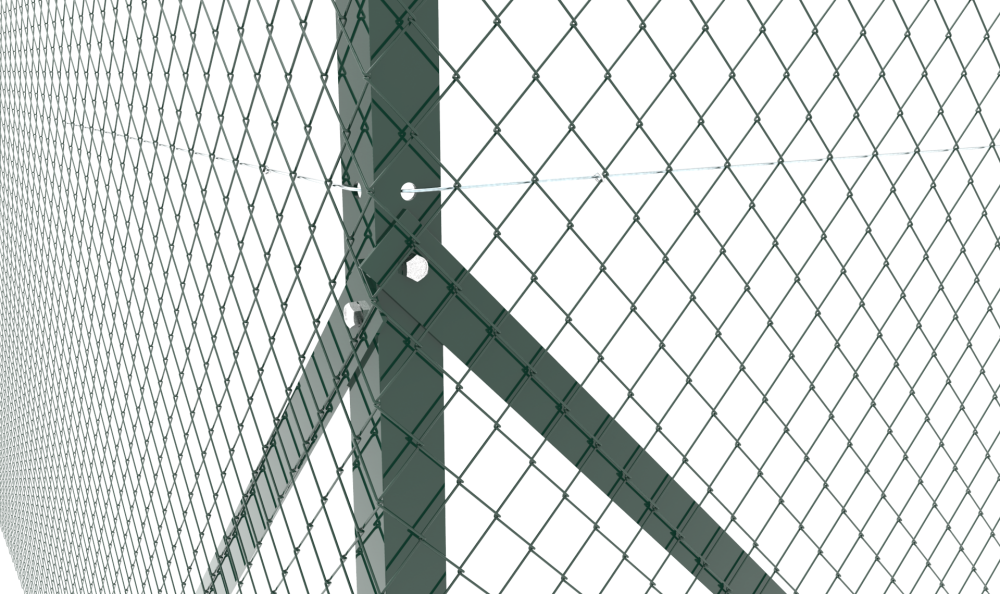
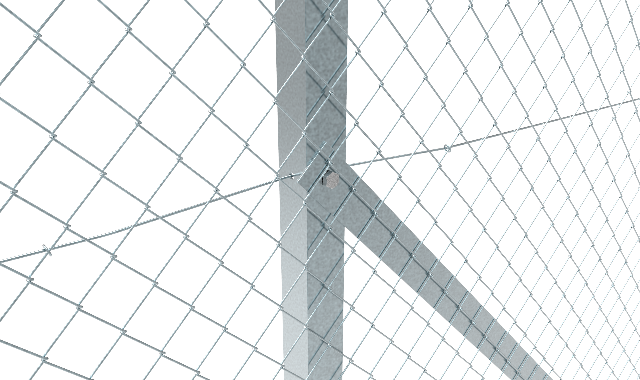
Four types, and you need all four on a real run. We stock them in 50 x 50 x 5mm galvanised angle iron, except intermediates which are 3mm, in heights from 900mm to 2.7m — each supplied long enough to dig in.
Which post goes where
| Post | Where it goes |
|---|---|
| Straining | Every 60m or so on a straight run, and at changes of gradient |
| Corner | Every direction change |
| End | Where the run terminates |
| Intermediate | Between the above, carrying the mesh |
Angle iron posts
-1729703281904.webp)
Line wire
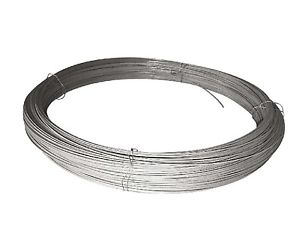
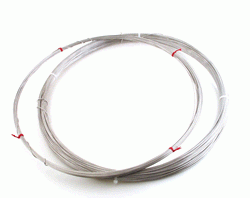
Line wires run horizontally between straining posts and are what the mesh is actually tied to — top, bottom and usually a middle wire on anything above 1.2m. Skipping the bottom line wire is why so much old chain link flaps at the bottom and can be lifted.
The fittings
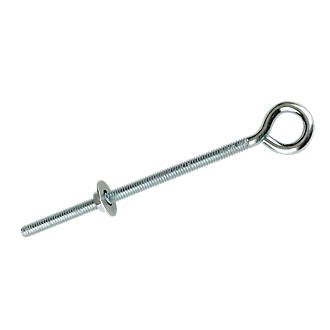
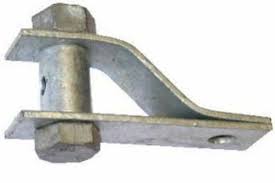
Eye bolts to strain the line wire at the straining posts, cleats to hold the mesh to the posts, coach bolts to fix the cleats, tie wire to attach the mesh to the line wires, and a ferrule winder to tension it all off. None of them are expensive; all of them are needed.
Chain link fittings
Getting the tension right
Chain link that sags was strained badly, not made badly. Strain the line wires first and get them tight — that is what the eye bolts and ferrule winder are for — then hang and tie the mesh to them. Straining the mesh itself instead of the wires is the classic mistake and it never holds.
The honest comparison
Per metre, chain link is the cheapest fence we sell. Per year of service on a boundary anyone tests, rigid mesh costs less, because it does not get cut, does not sag and does not need re-straining. Choose chain link for area and cost, not for security.
Products covered in this guide
Frequently asked questions
- What do you need to install chain link fencing?
Chain link rolls, straining posts, corner posts, end posts and intermediate posts, line wire for the top, bottom and middle, eye bolts to strain the line wire, cleats and coach bolts to fix the mesh to the posts, tie wire, and a ferrule winder to tension it. The mesh alone is not a fence.
- How far apart should chain link straining posts be?
Around every 60m on a straight run, plus at every corner, every end, and at any significant change of gradient. Intermediate posts go between them to carry the mesh.
- Is chain link fencing secure?
Not really. It can be cut with hand tools in seconds and the diamond weave gives an easy foothold for climbing. It is the right choice for enclosing a large area cheaply, and the wrong one for any boundary likely to be attacked — use rigid mesh or palisade for that.